Overpriced grocery items are usually products where you pay extra for convenience, small packaging, branding or preparation rather than a meaningful difference in the food itself. The exact price gap varies by store and region, so the smartest approach is to compare unit prices and choose the option that fits your time, storage space and household needs.
This guide highlights ten categories that are often worth comparing. None is automatically a bad purchase: pre-cut vegetables, for example, can be valuable when time or mobility matters. The goal is to notice the convenience premium and decide deliberately.
How to Identify Overpriced Grocery Items
Start with the shelf label. Compare the price per gram, ounce, litre or count rather than the package price. Then consider waste: a larger package is not cheaper if part of it spoils. A quick pantry audit also helps you avoid buying duplicate ingredients.
10 Overpriced Grocery Items and Practical Alternatives
1. Pre-Cut Vegetables
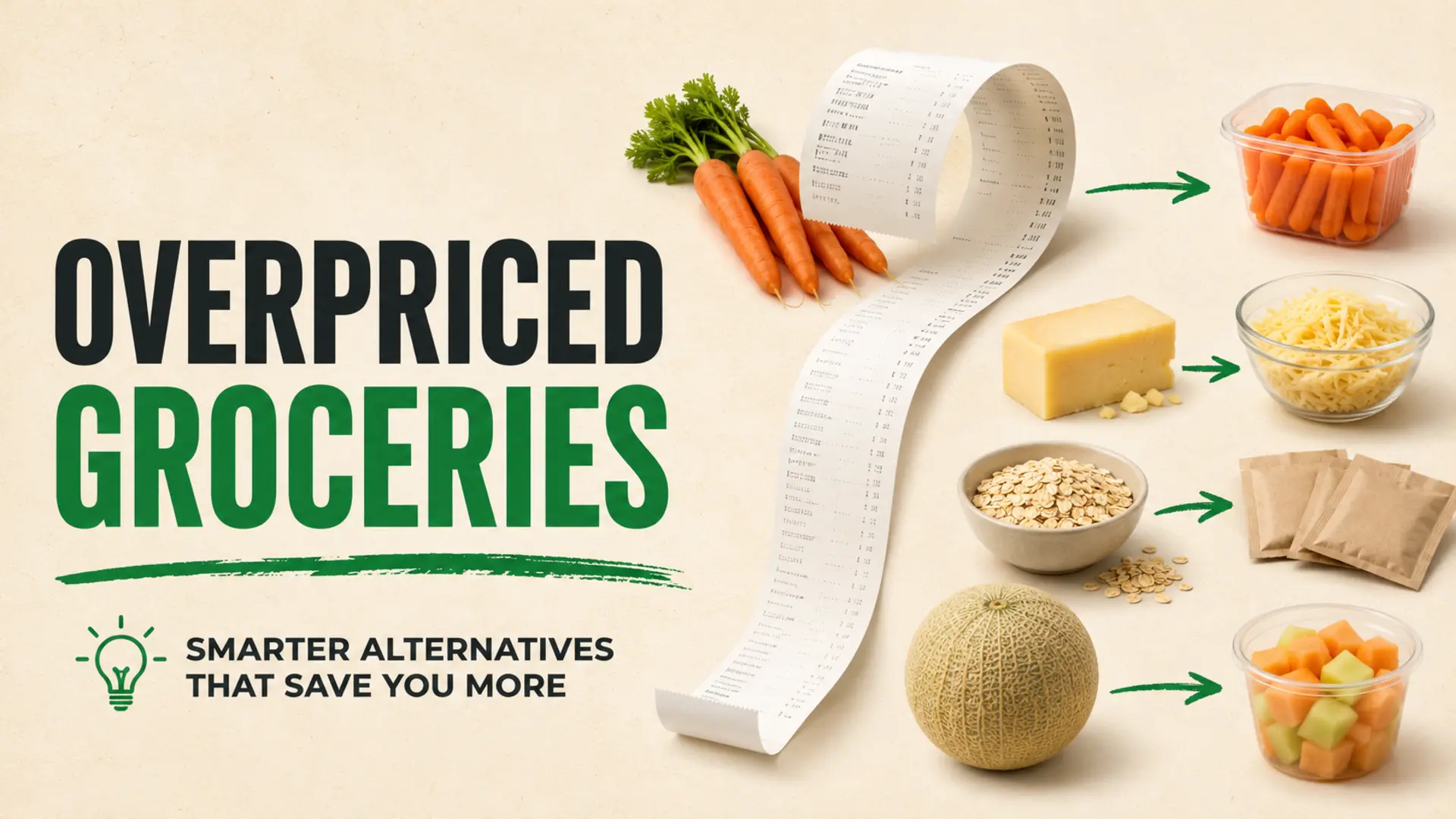
Washed and chopped vegetables save preparation time but often cost more per unit than whole produce. When practical, buy whole carrots, broccoli or peppers and prepare only what you expect to use. Choose pre-cut vegetables when the convenience will genuinely help you cook instead of ordering food or letting produce spoil.
2. Single-Serve Oatmeal Packets
A larger bag or tub of plain oats is often more flexible than individual flavoured packets. Portion oats into reusable containers and add fruit, cinnamon, nuts or seeds according to your preference. Check ingredient labels if sugar or allergens matter to you.
3. Bottled Salad Dressing
Prepared dressing can be useful, but basic versions are easy to mix in small quantities. Try oil with vinegar or lemon juice, mustard and seasoning. Make only enough for several meals and refrigerate it safely. If a bottled dressing prevents an opened ingredient from going unused, it may still be the better-value choice.
4. Pre-Shredded Cheese
Compare shredded cheese with a block of the same type by weight. Grating a block yourself may offer better value and lets you choose the amount you need. Pre-shredded cheese remains reasonable when convenience, portion control or limited preparation time is the priority.
5. Single-Serve Bottled Water
Where local tap water is safe and suitable, a reusable bottle can reduce repeated purchases. A filter may improve taste, but it is not necessary for every household. Follow local drinking-water guidance rather than assuming one solution works everywhere.
6. Pre-Marinated Meat or Plant Proteins
Prepared proteins combine seasoning and convenience in one package. Compare them with plain alternatives and the small amount of marinade you would use at home. Always check the use-by date, storage instructions and ingredient list; do not assume marinated products are lower quality.
7. Small Spice Blends
Specialty blends can become expensive when you already own most of their ingredients. Before buying, check your spice shelf and mix a small batch from seasonings you use regularly. Buy only quantities you can keep fresh, because bulk spices are not a saving if they lose flavour before use.
8. Pre-Cut Fruit Cups
Whole melon, pineapple or other fruit may cost less by usable weight, but the best choice depends on preparation time and how much your household will eat. Compare the drained or edible quantity and choose a size that limits waste.
9. Packaged Trail Mix and Snack Packs
Ready-made snack packs charge for portioning and packaging. If you regularly eat nuts, seeds and dried fruit, compare the unit cost of separate ingredients and create your own mix. Account for dietary needs and storage, and avoid buying oversized bags solely because the unit price looks lower.
10. Brand-Name Baking Staples
Flour, sugar, salt and similar basics are useful places to compare store brands with familiar names. Read the ingredient list, package size and any relevant production or allergen information. Test one lower-cost option at a time instead of assuming every generic product is identical.
When Paying More Is Worth It
- The prepared option makes it more likely that you will cook and use the food.
- A smaller package prevents waste in a one- or two-person household.
- The product meets a specific dietary, accessibility or quality need.
- The time saved is more valuable to you than the price difference.
Build a Better-Value Grocery List
Pick two or three items from your regular list and compare unit prices during your next shop. Record the useful alternatives, then review your receipts to see whether the swaps worked in real life. Our guides to reducing your monthly grocery bill and planning meals around sales flyers can help you turn those comparisons into a repeatable routine.
Choose Value, Not Just the Lowest Price
The most overpriced grocery items are not the same in every store or household. Compare like with like, include the value of your time, and buy an amount you can realistically use. A thoughtful list makes it easier to spend intentionally without turning every convenience purchase into a mistake.