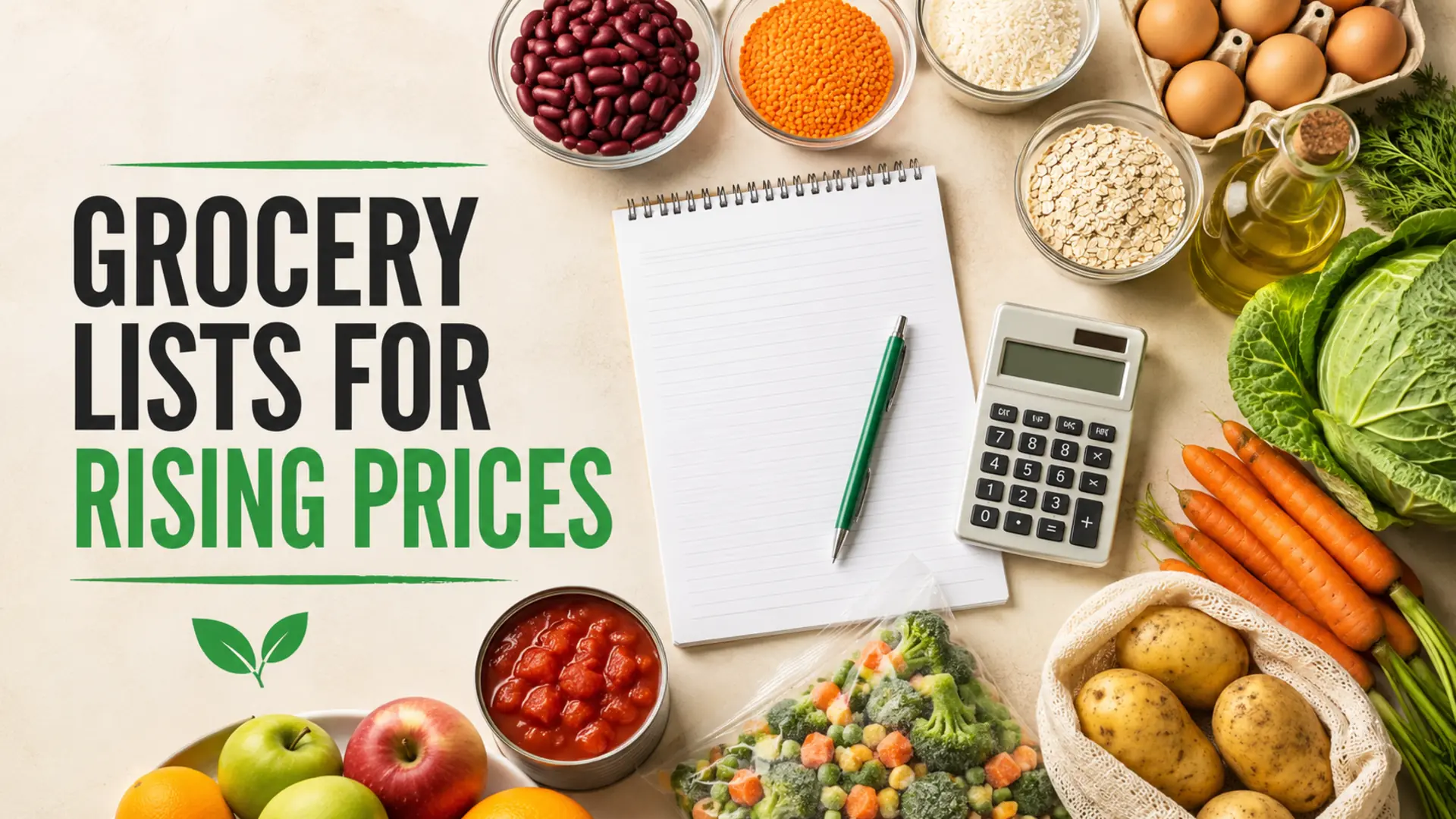
A grocery list for rising prices works best when it is built around flexible meals, current local prices and food you will actually use. Check your kitchen first, choose ingredients that can serve more than one meal, compare unit prices where useful, and leave room to substitute when a planned item is unusually expensive.
No food is permanently “inflation-proof,” and the cheapest choice changes by store, season, package size and region. The goal is not to predict every price increase. It is to create a shopping and cooking system that can adjust without sacrificing variety or buying food that goes unused.
Start a Grocery List for Rising Prices With an Inventory Check
Look through the refrigerator, freezer and pantry before choosing meals. Identify food that should be used soon, partial packages and ingredients you already have in enough quantity. This prevents duplicate purchases and gives the week’s menu a practical starting point.
- List vegetables and fruit that should be used first.
- Check cooked grains, proteins, sauces and leftovers.
- Count staple items instead of assuming they are available.
- Note freezer foods that can replace a new purchase.
- Build at least one meal around existing ingredients.
The updated EPA guidance on preventing wasted food at home recommends checking existing supplies, planning meals and making a list before shopping. A short pantry audit can turn that advice into a repeatable habit.
Plan Flexible Meals, Not Isolated Recipes
Choose meal formats that accept several ingredients: soups, curries, pasta dishes, tacos, grain bowls, stir-fries, tray bakes and frittatas. A flexible format lets you use the best-value suitable option at the store without abandoning the plan.
For each meal, identify four components: a protein source, vegetables, a carbohydrate and flavour builders. Write one acceptable alternative beside any component likely to vary in price or availability.
Example flexible meal
- Protein: chicken, tofu, eggs, beans or lentils
- Vegetables: cabbage, carrots, frozen mixed vegetables or seasonal produce
- Carbohydrate: rice, potatoes, pasta, bread or tortillas
- Flavour: onions, garlic, herbs, spices, tomato products or an appropriate sauce
Alternatives should still suit dietary, allergy and cultural needs. A lower shelf price is not useful if the household will not eat the result.
Compare Unit Price and Usable Quantity
A larger package is not automatically better value. Compare the price per unit of weight, volume or item when products are genuinely comparable. Many stores display unit prices; when they do not, divide the package price by its quantity using the same measurement for each option.
The University of Minnesota Extension explains how unit pricing supports grocery comparisons. Also consider edible yield and storage: bones, peels, liquid, spoilage risk and preparation time can affect the value you receive.
- Compare the same product type and measurement.
- Check whether the package can be used before quality declines.
- Consider whether freezing or portioning is realistic.
- Do not buy extra merely to reach a promotion threshold.
- Check the final receipt for pricing or quantity errors.
Use a Core List With Price-Sensitive Options
A core list reduces decision fatigue while allowing substitutions. Include foods your household uses regularly, then mark flexible categories rather than demanding one exact product.
- Protein options: beans, lentils, eggs, tofu, canned fish, poultry, meat or dairy, as appropriate
- Vegetable options: fresh seasonal produce, frozen vegetables or suitable canned choices
- Carbohydrate options: oats, rice, pasta, potatoes, bread, tortillas or other grains
- Meal builders: canned tomatoes, broth ingredients, herbs, spices and sauces
- Backup foods: one or two simple freezer or pantry meals for changed plans
For a compact starting point, adapt this guide to a minimalist kitchen with versatile core ingredients.
Stretch Ingredients Without Rigid Ratios
Beans, lentils, vegetables and grains can extend many dishes, but there is no universal 50/50 rule. Add amounts that suit the recipe, household preferences and nutritional needs. Lentils may work in a tomato sauce, beans in tacos, mushrooms in a savoury filling, or vegetables in a soup.
The aim is not to disguise ingredients or promise an unchanged flavour. It is to create satisfying meals with a composition the household enjoys. Introduce changes gradually and record successful combinations for future lists.
Choose Fresh, Frozen or Canned by Use
Fresh produce is useful when it will be eaten promptly. Frozen options can simplify portioning and provide a backup. Canned foods may be convenient and shelf-stable. Prices and quality vary, so compare the form that fits the meal rather than assuming one is always cheapest.
- Choose fresh items for planned meals and near-term snacks.
- Use frozen vegetables or fruit when you need small portions over time.
- Check canned-food ingredients and select products appropriate to dietary needs.
- Account for drained weight when comparing canned products.
- Avoid buying more freezer food than your storage can hold.
When seasonal supply affects value, use this guide to planning meals around seasonal produce without assuming that local or fresh is always cheaper.
Set a Spending Target With a Buffer
If budgeting is helpful, estimate the list using recent receipts, store listings or shelf prices. Keep estimates separate from confirmed prices and allow a modest buffer for variation. Prioritize essential meal components, then optional snacks, toppings and convenience items.
- Estimate essential items first.
- Mark products with acceptable alternatives.
- Add optional items only after the main meals are covered.
- Track the running total if that helps you stay within the target.
- Remove the lowest-priority item when the cart exceeds the limit.
A digital or paper list can support this process without requiring a special app feature. Use whichever format makes quantities, alternatives and priorities easiest to see.
Buy in Bulk Only When the Numbers Work
Bulk buying can lower a unit price, but only when the food fits your budget, storage and likely consumption. Check the unit price, expiry or quality considerations, safe storage capacity and realistic use rate before buying more.
Review this bulk-buying guide focused on preventing waste before committing to oversized packages.
Create a Use-First Cooking Sequence
After shopping, schedule meals according to perishability rather than assigning every dish to a rigid calendar. Use delicate produce and thawed foods earlier, then rely on sturdy vegetables, frozen items and pantry ingredients later. Move leftovers into the next meal while they remain safe and appealing.
Keep a visible “use first” area in the refrigerator and update the list when plans change. This protects the value of food already purchased and can reduce last-minute replacement shopping.
A Repeatable Rising-Price Grocery Routine
- Check the kitchen and identify use-first foods.
- Choose flexible meals with overlapping ingredients.
- Write alternatives for price-sensitive items.
- Compare unit prices and usable quantities.
- Estimate the essential cart and add a buffer.
- Shop the list while allowing sensible substitutions.
- Review the receipt and note successful choices.
- Cook perishables in a practical sequence.
A grocery list for rising prices cannot control the market, but it can make your household more adaptable. Focus on current comparisons, flexible meal structures, realistic quantities and ingredients with more than one purpose. Small, repeatable decisions are more dependable than fixed price claims or a list of foods that are supposedly always cheap.