
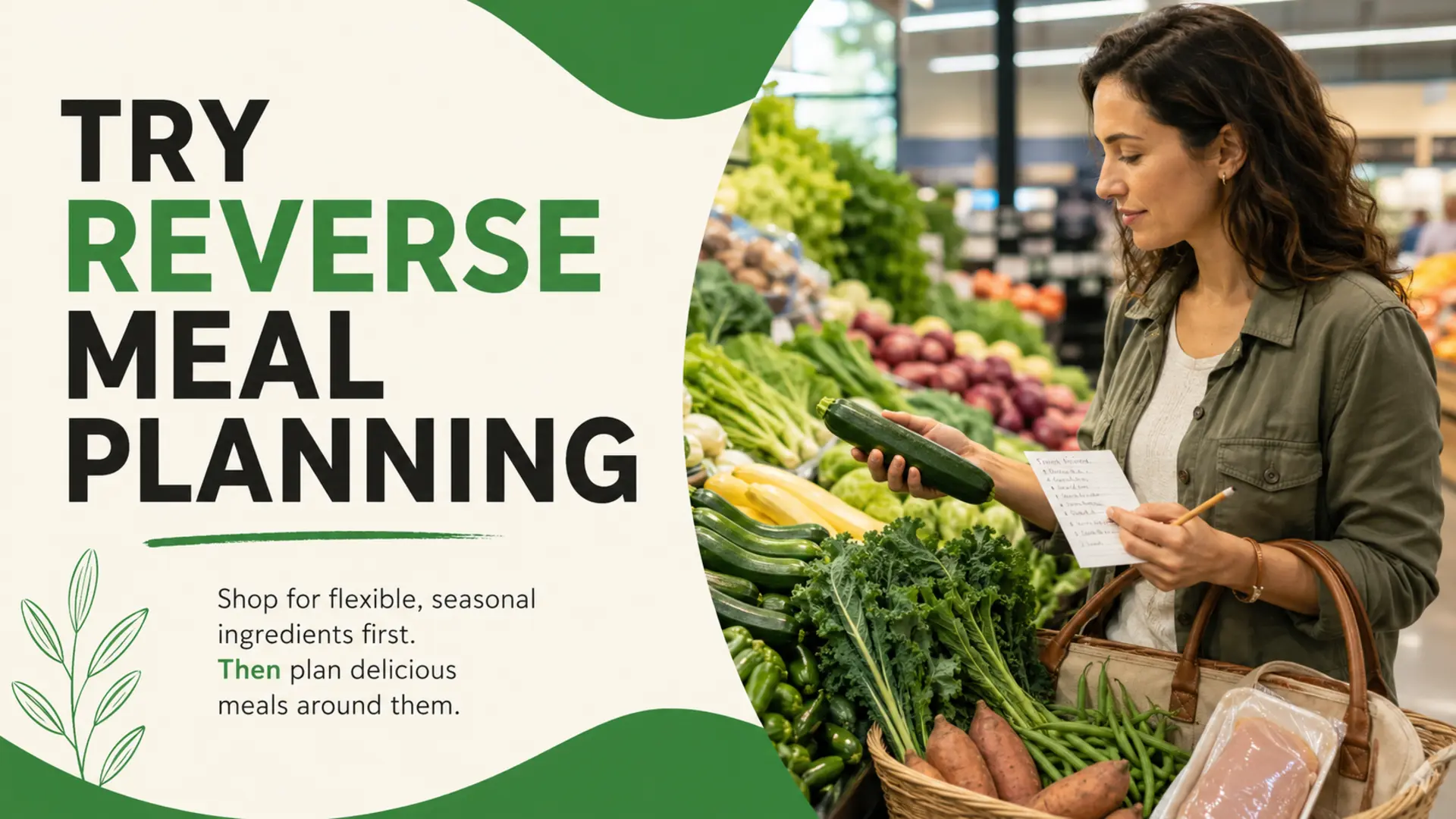
Reverse meal planning means choosing flexible, good-value ingredients first and then building meals around what you bought. Instead of committing to several exact recipes before checking prices, seasonality and availability, you shop with adaptable categories and finish the menu afterward.
This approach can make meal planning more responsive, but it should not mean shopping without a plan. A short pantry check, a spending limit and a list of useful ingredient categories keep the trip focused while leaving room for sensible substitutions.
How Reverse Meal Planning Works
Traditional meal planning usually follows this order: choose recipes, list their ingredients and shop for those exact items. Reverse meal planning changes the middle of that process. You identify what your household needs, compare what is available, select versatile ingredients and then decide the final meals.
It works best when you are comfortable cooking with flexible formats such as bowls, soups, stir-fries, sheet-pan meals, pasta dishes, curries or frittatas.
A Practical Reverse Meal Planning Workflow
1. Check Your Kitchen First
Review the refrigerator, freezer and pantry before shopping. Note ingredients that should be used soon and staples that can anchor several meals. Our guide to planning meals from what is already in your fridge provides a useful starting routine.
2. Set Flexible Shopping Categories
Write categories instead of fully fixed products. For example, list “two versatile vegetables,” “one protein,” “one whole grain” and “fruit for snacks.” Add non-negotiable items separately when dietary needs or planned events require something specific.
3. Compare Suitable Options at the Store
Look at seasonality, unit prices, package sizes and promotions. A lower price is useful only when the food suits your meals and household. Use supermarket sales flyers for flexible meal planning, but confirm the final price and any purchase conditions in store.
4. Build the Menu After Shopping
Once home, group the ingredients into meal formats. Match foods that share sauces, aromatics or cooking methods. Assign the most perishable ingredients to earlier meals and keep shelf-stable or frozen options for later in the week.
Choose Ingredients That Work Across Meals
- Proteins: eggs, beans, lentils, tofu, fish, poultry or another option your household uses.
- Vegetables: a mix of quick-cooking and longer-lasting choices.
- Carbohydrates: rice, pasta, potatoes, bread or grains that suit several formats.
- Flavour builders: onions, garlic, herbs, citrus, sauces and spices already in your kitchen.
- Backup items: frozen vegetables, canned beans or other dependable staples.
Choose foods for versatility, not because a generic list labels them essential. Dietary needs, cooking facilities, storage and local availability should shape the final basket.
Example Reverse Meal Plan
Suppose suitable options include zucchini, sweet potatoes, cabbage, beans and a protein your household enjoys. Those ingredients could support several flexible dinners:
- A sheet-pan dinner with sweet potatoes and zucchini.
- Tacos or wraps with beans, cabbage and a simple dressing.
- A grain bowl using roasted vegetables and leftover protein.
- A skillet meal combining remaining vegetables with eggs or beans.
- A soup, stir-fry or clean-out meal for small leftover portions.
The example is a structure, not a required shopping list. Adjust quantities and meals to your household size, preferences and safe storage capacity.
Handle Marked-Down Food Safely
Reduced-price perishables can be useful when you have an immediate plan for them. Check package condition, storage instructions and date labels. Refrigerate items promptly, cook them within appropriate guidance or freeze them while suitable. A discount does not make questionable food worth buying.
Avoid These Reverse Planning Mistakes
- Buying every discounted product without a meal idea.
- Choosing large packages that exceed storage or household needs.
- Ignoring ingredients already available at home.
- Planning only around perishables and leaving no flexible backup meal.
- Buying foods your household is unlikely to eat.
Combine Flexibility With an Organized List
A reverse meal plan still benefits from structure. Organize the list by store section, mark which categories are flexible and set quantity limits before shopping. This keeps comparison shopping efficient without turning the trip into an unplanned supermarket sweep. See our guide to organizing a grocery list by aisle.
Make Reverse Meal Planning Waste-Aware
After planning the meals, record where each perishable ingredient will be used. Schedule leftovers, freeze suitable extras and review the refrigerator midweek. These habits connect reverse planning with a practical waste-aware meal plan.
Shop Flexibly, Then Finish the Plan
Reverse meal planning works when flexibility is paired with boundaries. Check what you own, shop from useful categories, compare suitable options and assign every perishable ingredient to a realistic meal. The result is an adaptable plan shaped by real availability rather than rigid recipes.
Frequently Asked Questions
What is reverse meal planning?
Reverse meal planning means choosing flexible ingredients based on existing supplies, suitable prices, seasonality, and availability, then finalizing meals after shopping. It is not shopping without a plan. You still set a budget, quantity limits, dietary requirements, and useful ingredient categories before leaving home.
How is reverse meal planning different from pantry-first planning?
Pantry-first planning begins by building meals around food already at home and shopping only for gaps. Reverse meal planning may also leave several categories open for in-store choices. The approaches overlap and can be combined: inventory first, choose flexible categories, then finish the menu using what you buy.
Who benefits most from a shop-first meal plan?
It can suit confident, flexible cooks who can build bowls, soups, stir-fries, pasta, curries, sheet-pan meals, or frittatas from available ingredients. People following strict medical diets, precise recipes, or unfamiliar cooking routines may need more decisions fixed before shopping.
What should be on a reverse meal-planning grocery list?
Use categories with limits: one or two proteins, two versatile vegetables, a grain or starch, fruit, and any non-negotiable items. Add acceptable substitutions and quantities. Include backup foods such as frozen vegetables or canned beans so the week does not depend entirely on perishables.
How do I avoid impulse buying with reverse meal planning?
Set the spending limit and category quantities before entering the store. Require every flexible purchase to support at least one realistic meal and meet storage needs. A discounted product outside the categories is still unplanned; photograph it for later instead of automatically adding it.
How do I turn flexible groceries into a full weekly menu?
At home, group ingredients by cooking method and shared flavours. Assign the most perishable foods to early meals and use frozen or shelf-stable ingredients later. Give every perishable ingredient at least one planned role and schedule leftovers or a clean-out meal.
Can reverse meal planning work for food allergies?
Yes, but safety requirements should not remain flexible. Preapprove brands and substitutions, verify labels every time, and protect food from cross-contact. If a safe replacement is unavailable, skip the item rather than choosing an unfamiliar product because it is discounted.
Are marked-down foods good for reverse meal planning?
They can be useful when packaging is sound, storage guidance is followed, and you have an immediate cooking or freezing plan. Check dates and condition carefully. A reduced price does not make damaged, unsafe, or unwanted food a good purchase.
What are common reverse meal-planning mistakes?
Buying every sale, selecting too many perishables, ignoring existing food, choosing oversized packages, and leaving meals undefined after returning home are common problems. Flexibility needs boundaries. Review the basket before checkout and complete the meal schedule promptly after unpacking.
How do I know whether reverse meal planning saves money?
Track checkout totals, discarded food, takeout, and time spent planning for several weeks. Compare those results with your previous approach. Savings are household-specific; the method works only when flexible purchases become real meals rather than a collection of unrelated bargains.