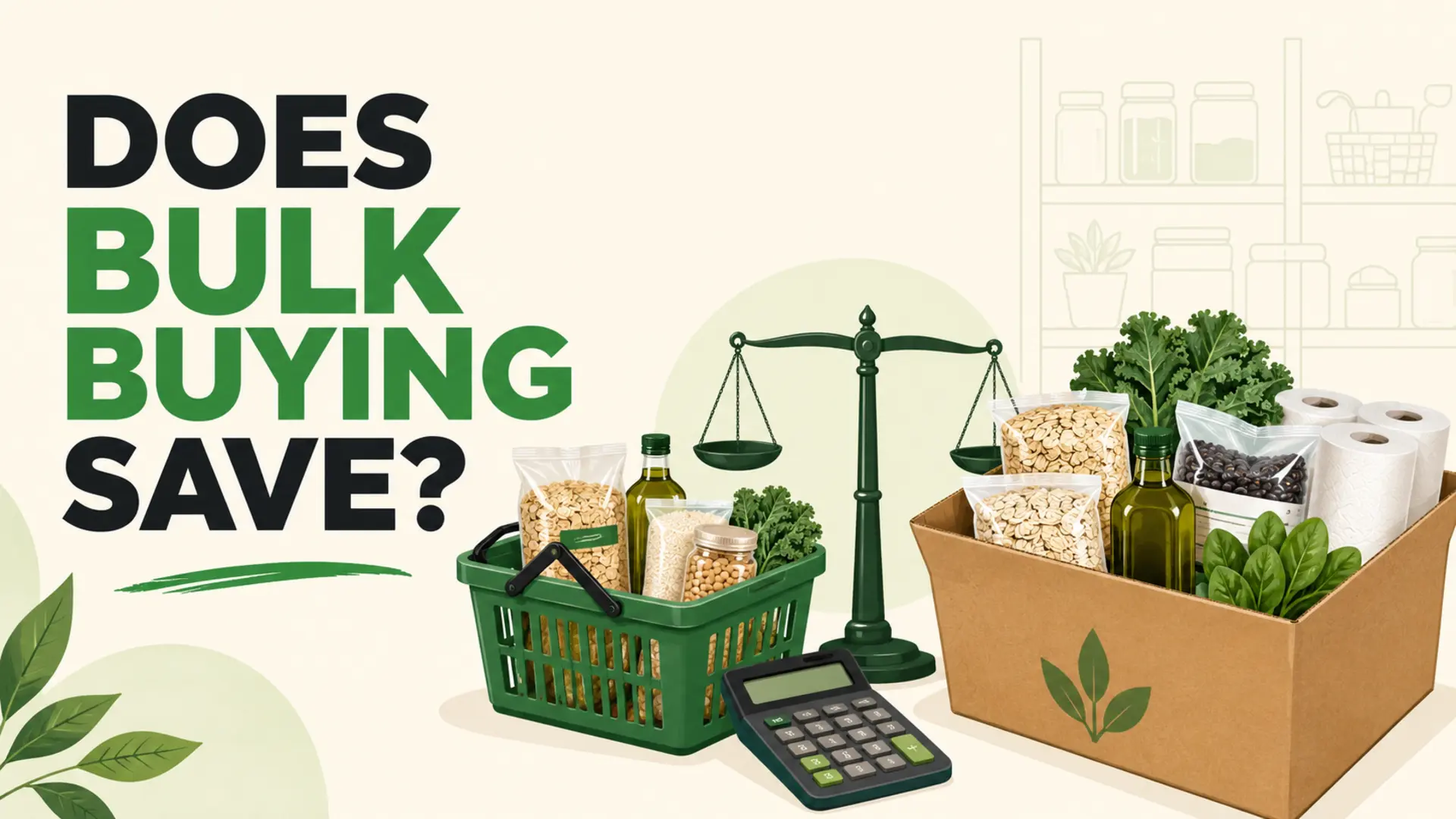
Bulk buying math determines whether a larger package or warehouse-club purchase costs less after membership fees, storage limits and possible waste are included. A lower unit price can be useful, but it does not automatically make the larger quantity a better household purchase.
Costco, Sam’s Club and other wholesale retailers can offer value for some shoppers, while supermarkets, local markets or smaller packages work better for others. The answer depends on your actual prices, consumption and shopping habits—not a universal list of products.
The Basic Bulk Buying Math
Start by comparing equivalent products in the same measurement:
Unit price = package price ÷ package quantity
Then include any extra costs that apply, such as an annual membership, travel, delivery fees or special storage. If part of the product is likely to spoil or remain unused, calculate value using the amount you realistically expect to consume.
Calculate the Membership Break-Even Point
Use the current fee for the membership you are considering rather than relying on an old example. Add the realistic savings from products and services you already purchase, then compare that total with the full annual cost.
Break-even spending = annual membership cost ÷ expected savings rate
If you do not know the expected savings rate, compare a short list of regular purchases directly. Record the warehouse unit price and the best suitable price available elsewhere. The difference is your potential saving per unit.
Compare the Total Cost, Not Just the Package
- Membership: include the full fee unless another household expense independently justifies it.
- Travel: consider fuel, transit, delivery or the extra time required.
- Storage: large frozen or shelf-stable purchases need safe, usable space.
- Cash flow: buying several months at once requires more money at checkout.
- Waste: an unused portion raises the effective cost of what you consumed.
- Impulse purchases: extra items can erase savings from carefully compared staples.
Use Unit Pricing Correctly
Compare weight with weight, volume with volume and count with count. Check concentration, ingredients, quality and dietary requirements so that the products are genuinely comparable. Our guide to using unit pricing for grocery comparisons explains the calculation in detail.
Account for Spoilage and Unused Portions
Suppose a large package has a lower unit price, but your household uses only part of it. Divide the full purchase price by the quantity actually consumed. This effective unit price gives a more honest comparison than the shelf label alone.
Before buying perishables in bulk, decide how much will be refrigerated, cooked, shared or frozen. The US Environmental Protection Agency’s food-waste guidance offers practical planning, storage and leftover-use ideas that can be adapted elsewhere.
Products That May Suit Bulk Buying
These categories can be worth comparing when your household uses them consistently and has suitable storage:
- Shelf-stable staples with manageable package sizes.
- Frozen foods that fit safely in available freezer space.
- Household supplies with predictable consumption.
- Frequently used ingredients that can be portioned or shared.
- Products where the larger option has a meaningful unit-price difference.
This is a comparison list, not a guarantee. A quick pantry audit can show whether you already own enough before buying more.
Purchases That Need Extra Caution
- Fresh produce that your household does not finish quickly.
- New products bought in a large size before anyone has tried them.
- Items that require storage space you do not have.
- Multi-packs containing flavours or varieties people avoid.
- Products purchased mainly because the package looks like a bargain.
A Simple Bulk-Buying Decision Checklist
- Do we already buy and use this product regularly?
- Is its unit price lower than a suitable alternative?
- Does the difference remain worthwhile after fees and travel?
- Can we store the quantity safely?
- Will we use it before quality declines?
- Does the larger purchase fit this month’s budget?
Review Actual Results
Save several receipts and compare expected savings with what happened. Note unused food, impulse items and products that lasted longer or shorter than planned. This turns bulk buying math into household-specific evidence. For a wider budgeting system, see our guide to reducing your monthly grocery bill.
Buy the Quantity That Creates Real Value
Warehouse shopping saves money when the total benefit from planned, regularly used purchases exceeds the membership and other costs. Compare unit prices, include waste and storage, and avoid buying extra simply because the package is large. The best quantity is the one your household can afford, store and use.