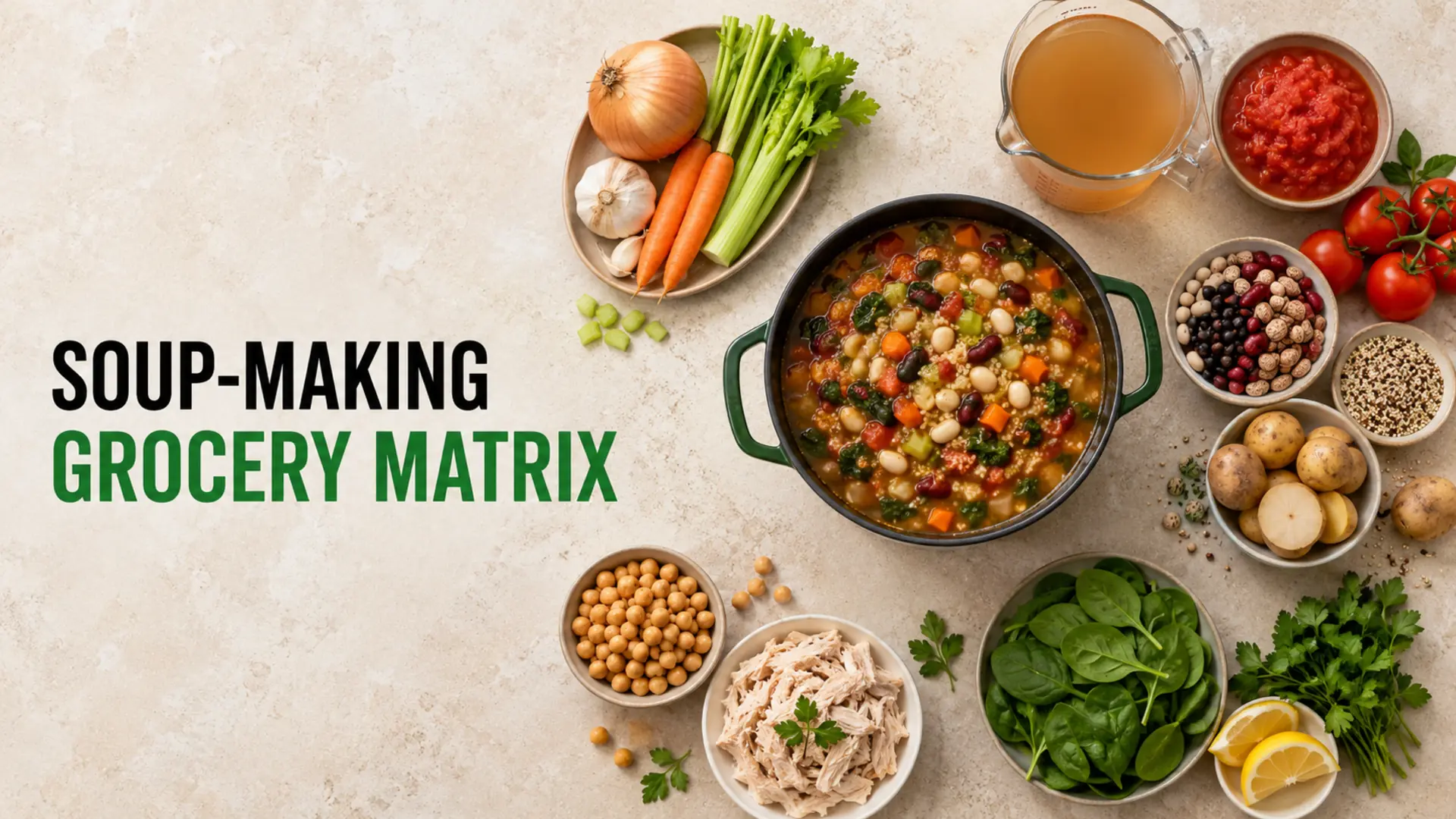
A good soup does not require a rigid recipe or a long list of one-use ingredients. This soup-making grocery matrix organizes shopping into five flexible parts: aromatics, liquid, body, protein and finishing ingredients. Choose one or two items from each group, then adjust the combination to your dietary needs, budget and the food already at home.
The matrix is a planning tool rather than a promise about cost, nutrition, serving count or cooking time. Pot size, ingredient choice and appetite all vary. Start with a realistic batch, follow package instructions and taste as you build.
How the soup-making grocery matrix works
Most soups can be planned by selecting components that play different roles. You do not need an ingredient from every row, and one ingredient may fill more than one role.
| Component | Flexible options | What it contributes |
|---|---|---|
| Aromatic base | Onion, carrot, celery, garlic, leek, ginger or scallion | Foundational flavour |
| Liquid | Water, vegetable stock, poultry stock, meat stock, canned tomatoes or coconut milk | Cooking medium and consistency |
| Body | Beans, lentils, potatoes, rice, barley, pasta or other grains | Texture and substance |
| Protein | Beans, lentils, tofu, chicken, turkey, beef, fish or eggs where suitable | A more substantial meal |
| Finish | Leafy greens, herbs, citrus, vinegar, yogurt, grated cheese or chilli | Freshness, acidity or contrast |
Build the list around foods your household will use in other meals. The same beans, grains and vegetables can support a one-pot meal plan, so leftover ingredients are less likely to sit unused.
1. Choose an aromatic foundation
Onion, carrot and celery are familiar choices, but they are not mandatory. Garlic and ginger suit many brothy soups; leeks add mild sweetness; scallions can work when a recipe needs a lighter base. Frozen chopped aromatics are useful when fresh produce would otherwise spoil.
Cook aromatics only as long as needed for the chosen style and heat level. A gentle sauté can soften them and develop flavour, while some clear broths use a different method. Avoid treating one fixed time as universal.
2. Select the liquid and control the seasoning
Stock and broth add convenience, but water plus well-chosen seasonings can also make a satisfying soup. Canned tomatoes create a robust base, while coconut milk can add richness to curries and blended vegetable soups.
Compare labels when sodium or allergens matter, and remember that stock, canned ingredients, sauces and cheese can all contribute salt. Start with less seasoning and adjust near the end. If using homemade stock, follow safe cooling and storage practices.
3. Add body with legumes, grains or vegetables
Lentils, beans, potatoes, rice, barley and pasta make soup more substantial. Their cooking needs differ: dried beans may require soaking or longer cooking, grains absorb liquid at different rates, and pasta can soften during storage. Check package directions and add each component at an appropriate stage.
Canned beans are convenient; drain or rinse them if that suits the recipe and dietary needs. Frozen vegetables can reduce preparation work and help keep the plan flexible. For more adaptable staples, see the guide to vegetarian meal-prep staples.
4. Pick a protein that fits the soup
Beans and lentils can provide both body and protein. Other options include tofu, cooked poultry, meat, fish or eggs, depending on the soup. Choose only what works for the people eating it and the preparation method.
Raw animal proteins must reach a safe internal temperature. Use a food thermometer and follow the current guidance for the specific ingredient rather than relying on colour or a fixed cooking time. When adding previously cooked food, heat it thoroughly and avoid repeated cooling and reheating.
5. Finish for balance and freshness
A small amount of lemon juice or vinegar can brighten a soup that tastes flat. Leafy greens, fresh herbs and scallions add colour and freshness; yogurt or grated cheese can add richness when appropriate. Offer strong flavours and common allergens separately when serving a group.
Add delicate greens and herbs toward the end so their texture and colour suit the final dish. Taste first: a soup that seems to need more salt may instead need acidity, herbs or a little dilution.
Three adaptable soup combinations
Chicken, grain and vegetable soup
Combine onion, carrot and celery with stock, a grain that suits your cooking schedule, cooked or safely cooked chicken, and a green vegetable. Finish with lemon and herbs. Use the grain’s package directions to plan liquid and timing.
Tomato, white bean and greens soup
Build a base with onion and garlic, then add tomatoes, stock or water, white beans and kale or spinach. Optional sausage can be cooked safely and added, but the beans already make the soup substantial.
Ginger lentil and spinach soup
Use onion, garlic and ginger with lentils, water or vegetable stock, and seasonings such as turmeric or cumin. Coconut milk is optional. Add spinach near the end and finish with citrus.
These are frameworks, not exact recipes. Quantities depend on pot size, desired thickness and the ingredients selected. If seasonal vegetables are abundant, the guide to planning meals around seasonal produce can help with substitutions.
Build the grocery list without overbuying
- Check the refrigerator, freezer and pantry first.
- Choose one planned soup combination.
- Cross off ingredients already available.
- Add only the components needed for the intended batch.
- Choose substitutes that also fit another planned meal.
- Organize the final list in the order of your usual store.
The EPA recommends planning around food already at home and buying only what is needed. Sorting the remaining items with an aisle-organized shopping list can make the trip easier without assuming every supermarket has the same layout.
Cool, store and reheat soup safely
Do not leave a large pot at room temperature to cool for an extended period. USDA guidance recommends dividing large quantities of soup into smaller, shallow containers so they cool quickly, then refrigerating them promptly. Label containers when useful.
FoodSafety.gov lists soups and stews with meat or vegetables for three to four days in the refrigerator and two to three months in the freezer, although quality and suitability vary by ingredient. Reheat leftovers to the temperature recommended by local food-safety authorities and use a thermometer where appropriate.
Use the matrix as a repeatable planning system
A soup-making grocery matrix is most useful when it reduces one-use purchases rather than encouraging a larger cart. Pick a familiar base, one substantial ingredient and a few vegetables, then finish the soup according to taste. Rotate combinations as seasons and pantry supplies change.
For additional guidance, consult the FoodSafety.gov cold-storage chart, the USDA’s advice on leftovers and safe cooling, the EPA’s food-waste prevention guidance and Canada’s Food Guide as one optional meal-planning reference alongside guidance for your own country.