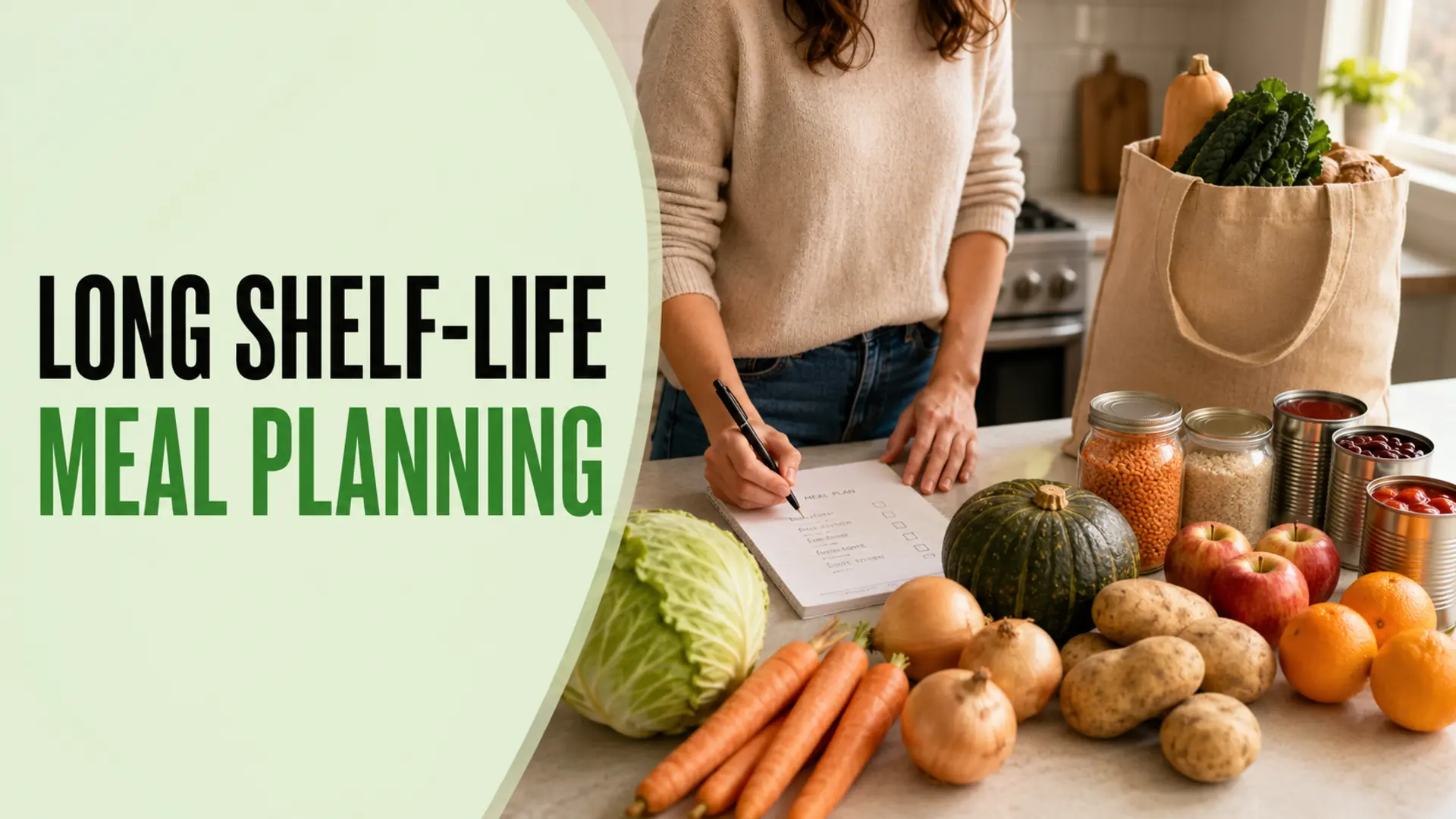
Long shelf-life meal planning starts with a mix of shelf-stable staples, appropriately stored produce and freezer ingredients—not with a rigid promise that every food will last a set number of weeks. Storage temperature, humidity, ripeness, packaging and handling all affect quality and safety.
The practical goal is to make several flexible meals from ingredients your household already likes. This can reduce unnecessary shopping trips and help you use food before it deteriorates, whether you live far from a supermarket, travel often or simply want a more dependable kitchen plan.
Start long shelf-life meal planning with an inventory
Check the pantry, refrigerator and freezer before choosing meals. Note open packages, produce that should be used soon and staples that are genuinely low. The EPA recommends planning around food already at home and buying only what is needed.
Sort the inventory into three groups:
- Use first: ripe or delicate produce, opened packages and refrigerated foods with limited storage time.
- Use next: hardy vegetables, fruit, eggs and other foods that remain useful when stored correctly.
- Use later: dry grains, legumes, canned foods and frozen ingredients that can support backup meals.
A regular monthly pantry audit makes this easier and helps prevent duplicate purchases.
Choose shelf-stable meal foundations
Build the list around a few foods that combine easily. Exact choices should reflect local availability, cultural preferences, dietary needs and preparation facilities.
Grains and starches
Rice, oats, pasta, couscous, barley and other dry grains can form the base of bowls, soups, breakfasts and side dishes. Store them in closed containers according to package directions and inspect for moisture or pests before use.
Legumes and proteins
Dried or canned beans, chickpeas and lentils are versatile options. Canned fish, shelf-stable tofu and nut or seed products may also fit, depending on allergies and preferences. Read labels and rotate foods your household will actually eat.
Flavour builders
Canned tomatoes, broth, coconut milk, herbs, spices, oils, vinegars and familiar sauces can turn the same base ingredients into different meals. Keep package instructions and storage needs in mind after opening.
Add produce that suits your storage conditions
Cabbage, carrots, beets, onions, potatoes, winter squash, apples and citrus are often considered more durable than delicate greens or berries. However, their useful life is not guaranteed. Buy them in quantities that match your storage space and normal consumption.
Keep produce clean, dry and appropriately separated. Some items prefer cool, dark, ventilated storage; others need refrigeration. Pre-cut produce should be refrigerated. Use the FoodKeeper resource or trustworthy local guidance for item-specific recommendations instead of applying one universal timeline.
Planning around what is locally abundant can also improve flexibility. See the guide to planning meals around seasonal produce for substitution ideas.
Use the freezer as part of the plan
Frozen vegetables, fruit, cooked grains and properly packaged proteins can extend the range of meals without relying only on canned foods. Date and label packages, keep an inventory and move older items forward so they remain visible.
Freezing pauses microbial growth but does not make unsafe food safe. Follow appropriate handling, thawing and cooking instructions. Texture can also change after freezing, so test smaller amounts before preparing a large batch.
Build meals in order of perishability
Instead of assigning every ingredient to a fixed 14-day calendar, plan meals in a sequence that can adapt as food changes.
Use delicate foods first
Early meals can feature leafy greens, berries, fresh herbs, ripe fruit and other ingredients that show quality changes sooner. Examples include vegetable omelettes, salads with grains and beans, or fresh-produce stir-fries.
Move to hardy produce
Later meals might use cabbage, carrots, squash, potatoes or apples. Try roasted vegetable bowls, cabbage-and-bean skillets, carrot soup or squash curry. Inspect each item before preparation rather than relying only on the purchase date.
Keep pantry and freezer meals as flexible backups
Lentil soup, tomato pasta with beans, chickpea curry, oatmeal with frozen fruit and rice bowls with frozen vegetables can remain options when fresh plans change.
This sequence is a guide, not a rule. If a food ripens quickly or a package is opened, move it forward.
Seven adaptable meal combinations
- Lentil tomato soup: lentils, canned tomatoes, carrots, onion and seasonings.
- Chickpea squash curry: chickpeas, winter squash, coconut milk, aromatics and spices.
- Cabbage rice bowl: sautéed cabbage, rice, beans or another protein, and a simple sauce.
- Bean and potato skillet: potatoes, beans, onion and frozen vegetables.
- Tomato pasta: pasta, canned tomatoes, lentils or beans, and herbs.
- Oatmeal combination: oats, apples or frozen fruit, seeds and spices.
- Flexible grain soup: broth or water, barley or rice, beans and available vegetables.
These are formats rather than exact recipes. Adjust quantities and cooking methods to the people eating, package directions and safe preparation requirements.
Shop for overlap instead of maximum volume
Longer-lasting food is not useful if you buy more than the household can reasonably use. Compare package sizes and choose ingredients that appear in more than one planned meal. An extra-large package is only practical when the unit price, storage capacity and expected use all make sense.
The guide to bulk buying without wasting food explains how to check consumption and storage before purchasing larger quantities.
Create a practical grocery checklist
- Two meal foundations, such as rice and pasta
- Two legume or protein options
- Two canned or jarred flavour builders
- Several hardy produce items in realistic quantities
- One or two delicate foods for early meals
- Frozen vegetables or fruit for backup meals
- Familiar herbs, spices and sauces
Review the refrigerator again before finalizing the list. A fridge-first meal-planning workflow can help turn priority ingredients into actual meals.
Store and prepare ingredients safely
Follow product labels and local food-safety advice. Keep perishable foods refrigerated at the recommended temperature, separate raw animal products from ready-to-eat foods, and wash produce under running water before preparation. The FDA advises against washing produce with soap or household detergent.
Discard food that is spoiled or subject to a recall. Do not taste questionable food to determine whether it is safe. When guidance differs by country or product, follow the manufacturer and the relevant local authority.
A resilient plan stays flexible
Long shelf-life meal planning works best when it combines an accurate inventory, sensible quantities and foods that can move between meals. Use delicate ingredients first, keep hardy produce visible, and treat pantry and freezer staples as adaptable support rather than an excuse to overstock.
For current storage and handling guidance, consult the official FoodKeeper resource, the EPA’s food-waste prevention guidance, the FDA’s advice for selecting and preparing produce safely and Canada’s Food Guide as one optional planning reference alongside guidance for your country.