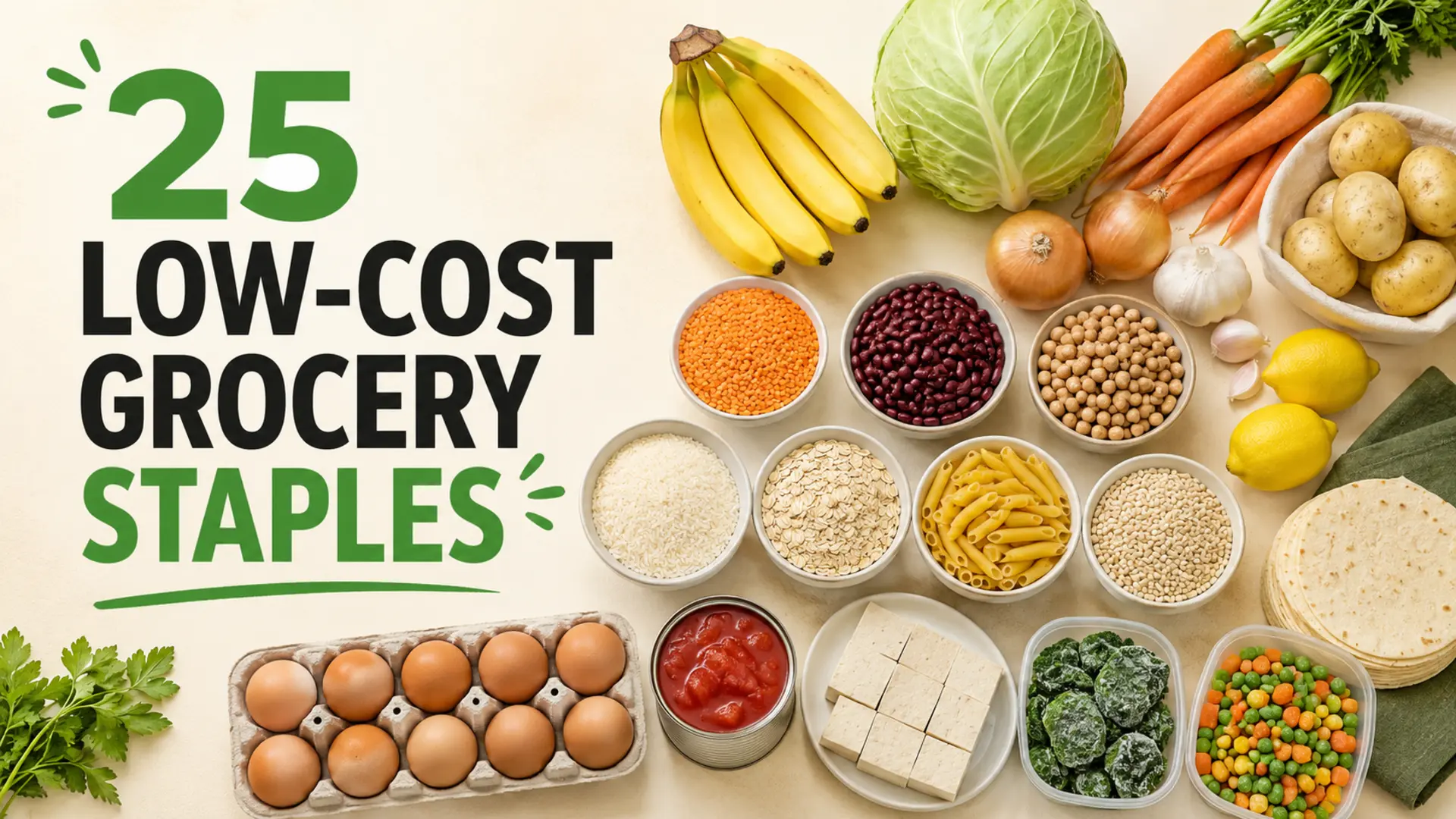
Grocery items under $2 can still be found in some stores, package sizes and currencies, but no fixed-price list is accurate everywhere or forever. Use this list of 25 low-cost staples as a set of products to compare locally, then confirm the package size, unit price and suitability for your household.
An item priced below two dollars is not automatically good value. A slightly higher-priced package may provide more usable food, while a cheap product becomes expensive if it goes unused. Focus on ingredients that support several meals and fit your storage.
How to Use a Grocery Items Under $2 List
- Check the current price in your local store and currency.
- Compare equivalent products using the same unit.
- Confirm the package size and edible or drained quantity.
- Choose foods your household already eats.
- Buy only an amount you can store and use.
For consistent comparisons, review our guide to using unit pricing at the supermarket.
Affordable Produce to Compare
1. Bananas
Buy a quantity that matches how quickly your household eats them. Ripe extras can be frozen for smoothies or baking.
2. Cabbage
Use cabbage in slaws, soups, stir-fries and roasted dishes. Compare whole and pre-cut versions by usable weight.
3. Carrots
Whole carrots can support snacks, soups, stews, roasting and salads. Check whether loose or bagged carrots offer better value locally.
4. Onions
Onions are versatile flavour builders for many savoury meals. Buy loose onions when a large bag would exceed your needs.
5. Potatoes
Potatoes can be baked, mashed, roasted or added to soups. Store them appropriately and remove spoiled items promptly.
6. Garlic
A small amount flavours many dishes. Compare loose bulbs with packaged quantities and choose only what you will use.
7. Seasonal Citrus
Lemons, limes or other citrus may be affordable when locally available or in season. Use them for dressings, sauces and flavouring.
Low-Cost Grains and Legumes
8. Dry Lentils
Lentils work in soups, curries, salads and sauces and usually require no soaking. Compare varieties by cooking time and intended texture.
9. Dry Beans
Dry beans may offer value when you have time and equipment to soak and cook them safely. Canned beans can be more practical in smaller households.
10. Canned Chickpeas
Use chickpeas in salads, soups, curries, bowls and dips. Compare drained weight rather than can size alone.
11. Rice
Rice supports bowls, curries, stir-fries and side dishes. Choose a variety your household enjoys and follow safe cooling and storage practices.
12. Rolled Oats
Plain oats can become porridge, overnight oats, baked breakfasts or savoury dishes. Compare larger packages only if they fit regular use.
13. Pasta
Store-brand pasta may be worth comparing with familiar brands. Pair it with vegetables, beans or another suitable protein.
14. Barley or Another Local Grain
Barley can add substance to soups, salads and grain bowls. Where it is not affordable or available, compare another locally common grain.
15. Tortillas or Flatbread
Use them for wraps, tacos, quick pizzas or alongside soups. Check count, size and storage needs before selecting a package.
Proteins and Canned Staples to Check
16. Eggs
Smaller cartons or individual eggs may fall near the target in some regions. Compare price per egg and choose a dietary alternative when needed.
17. Canned Tuna
Prices, sustainability choices and dietary guidance vary. Compare drained weight and select an appropriate portion and variety.
18. Sardines or Another Tinned Fish
Tinned fish may be affordable in certain markets. Check the serving size, ingredients and household preference before buying.
19. Canned Tomatoes
Whole, diced or crushed tomatoes can form the base of sauces, soups and stews. Choose the form that matches your regular recipes.
20. Tomato Paste
Tomato paste adds concentrated flavour. Freeze suitable leftover portions when you cannot use an opened container promptly.
21. Tofu
Tofu prices differ considerably by region and package size. Compare types and buy the firmness required for your intended dish.
Frozen and Baking Basics
22. Frozen Spinach
Frozen spinach can be added to soups, curries, pasta and egg dishes. Compare the usable quantity with fresh options.
23. Frozen Mixed Vegetables
Mixed vegetables offer flexible portions and can reduce spoilage. Choose blends your household will use across multiple meals.
24. Salt
Salt is a low-volume pantry basic rather than a meal foundation. Buy an appropriate type and quantity and follow relevant health guidance.
25. Baking Soda
Baking soda is useful in specific recipes and household tasks, but it belongs on the list only when you have a planned use.
Build Meals From the List
- Lentil and tomato soup with carrots and onions.
- Rice bowls with beans, cabbage and a suitable sauce.
- Pasta with tomato, spinach and chickpeas.
- Potato and vegetable frittata or a plant-based alternative.
- Oats with bananas for breakfast.
For more flexible combinations, see these budget-friendly meal staples.
Keep a Strict Budget Flexible
If very low prices are unavailable, compare the cheapest useful package rather than forcing the original threshold. Our flexible grocery-budget challenge explains how to adapt a target to local prices and household needs.
Check What You Already Own
Before buying any low-cost staple, complete a quick pantry audit. The cheapest purchase is not a saving when it duplicates food that is already waiting to be used.
Use the Price Point as a Local Filter
Grocery items under $2 are a location- and package-specific search target, not a universal promise. Compare current prices, consistent units and realistic quantities. Prioritize versatile ingredients your household enjoys, even when the exact local threshold needs to change.