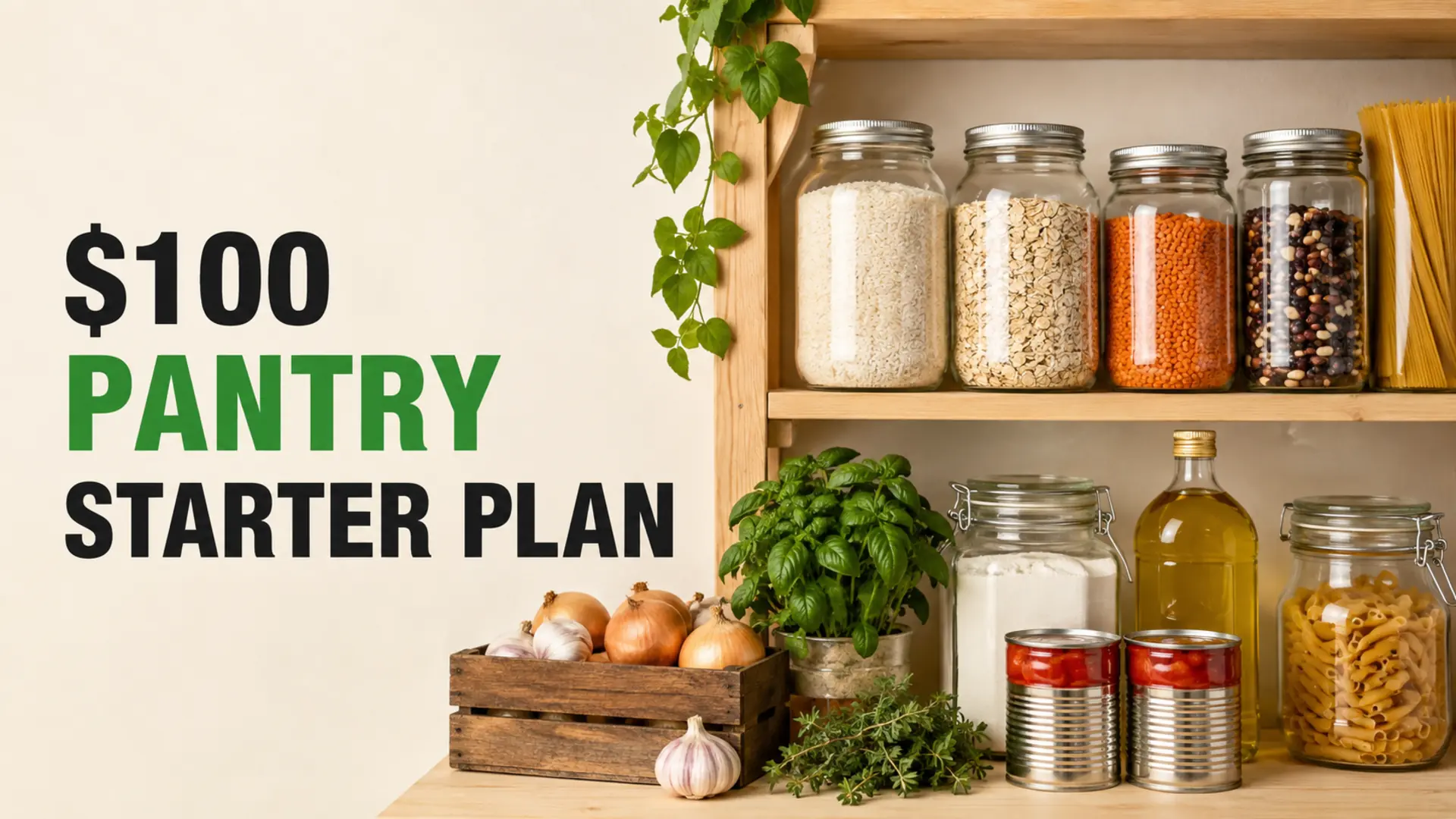
Frugal pantry building starts with a flexible budget, a short list of foods your household actually eats and enough storage to use everything before quality declines. A $100 target can be a useful planning exercise, but local prices, dietary needs and what you already own determine what belongs in your starter pantry.
What a $100 pantry plan can realistically do
A limited pantry budget is best used to create a foundation for meals, not to promise a fixed number of months or complete nutrition by itself. Shelf-stable grains, legumes, canned foods, cooking fats and seasonings become more useful when combined with fresh, frozen or refrigerated ingredients.
Treat the amount as a ceiling rather than a spending requirement. If your kitchen already has oil, flour or spices, direct that part of the budget toward missing staples. If $100 is too high, build the pantry in smaller stages.
Start frugal pantry building with an inventory
Check cupboards, refrigerator, freezer and storage bins before shopping. Record open packages, duplicates and foods that should be used soon. This prevents the starter plan from buying items you already have.
A structured monthly pantry audit can help you identify real gaps and maintain the pantry after the initial shop.
Divide the budget by function, not fixed percentages
Rigid percentages do not work for every household. Instead, assign spending in order of usefulness:
- Meal foundations: grains, pasta, oats or other staples you cook regularly.
- Protein options: dried or canned beans, lentils, nut or seed butter, canned fish or another suitable choice.
- Meal builders: canned tomatoes, broth ingredients, coconut milk or shelf-stable vegetables.
- Cooking essentials: an appropriate oil, salt and a few frequently used seasonings.
- Baking basics: flour and leavening only if baking is part of your normal routine.
- Flexible reserve: money for dietary needs, local specials or a missing ingredient.
A flexible $100 pantry shopping framework
Use this as a category checklist rather than a universal receipt. Select a few items from each relevant group and adjust package sizes to local prices and storage space.
Grains and starches
- Rice or another familiar grain
- Rolled oats
- Pasta, noodles or couscous
- Flour or shelf-stable bread alternatives, if useful
Legumes and other pantry proteins
- Dry lentils or split peas
- Dry or canned beans
- Chickpeas
- Peanut butter or another suitable spread
- Canned fish, tofu in shelf-stable packaging or another preferred option
Cooking and flavour foundations
- One everyday cooking oil
- Canned tomatoes or tomato paste
- Vinegar or another acidic seasoning
- Salt, pepper and two or three spices used in your regular meals
- Onions and garlic when storage conditions are suitable
Optional meal extenders
- Shelf-stable milk or coconut milk used in planned recipes
- Canned vegetables or fruit
- Seeds, dried fruit or other additions your household finishes reliably
- Baking soda, baking powder or yeast only when required
Choose quantities using unit prices and turnover
A large package is worthwhile only if its unit price is lower, it fits your storage and it will be used. Compare like units and calculate the cost per weight or volume. The guide to using unit pricing explains the comparison process.
Buy a smaller amount when trying an unfamiliar food. A slightly higher unit price can still produce a lower total cost if it prevents an unused package from sitting in the cupboard.
Build meals before building the pantry
List several meals you can make from overlapping ingredients. For example, rice, lentils, tomatoes and seasonings can support soups, grain bowls, stews and fillings when combined with suitable fresh vegetables or proteins. Oats can work for breakfast and some baking.
If an item appears in only one aspirational recipe, leave it for a later shop. The pantry should reflect how you cook now. These budget-friendly meal staples offer flexible starting points and substitutions.
Store pantry foods safely
Keep dry foods in clean, dry, food-safe containers and follow package directions. Store older products where they will be used first, label transferred foods and check for moisture, pests, damaged packaging or unusual odours. Do not buy more than your storage area can protect.
For preparedness needs, use a dedicated 14-day emergency pantry guide rather than assuming an everyday starter pantry covers emergencies. Water, special diets, medication needs and foods that require no cooking may change that list.
Restock gradually instead of starting over
Track what runs out, what remains untouched and which ingredients reduce last-minute shopping. Replace proven staples before adding variety. Use sales only for items already on the restock list, and leave room in the budget for fresh foods.
The EPA’s food-waste prevention guidance recommends planning, storage and using food you already have—principles that also keep a pantry economical.
Common pantry-building mistakes
- Buying unfamiliar foods only because they are inexpensive.
- Spending heavily on spices before choosing regular meals.
- Purchasing bulk packages without checking unit price or storage.
- Counting shelf-stable ingredients as complete meals without fresh additions.
- Ignoring allergies, dietary requirements or preparation time.
- Filling every shelf and leaving no room for normal turnover.
Build a pantry that fits your household
Successful frugal pantry building is measured by how often the food becomes useful meals—not by reaching an exact item count. Inventory first, prioritize versatile staples, compare unit prices and expand slowly. A well-used pantry can make weekly shopping more predictable while remaining flexible enough for changing prices, tastes and household needs.