
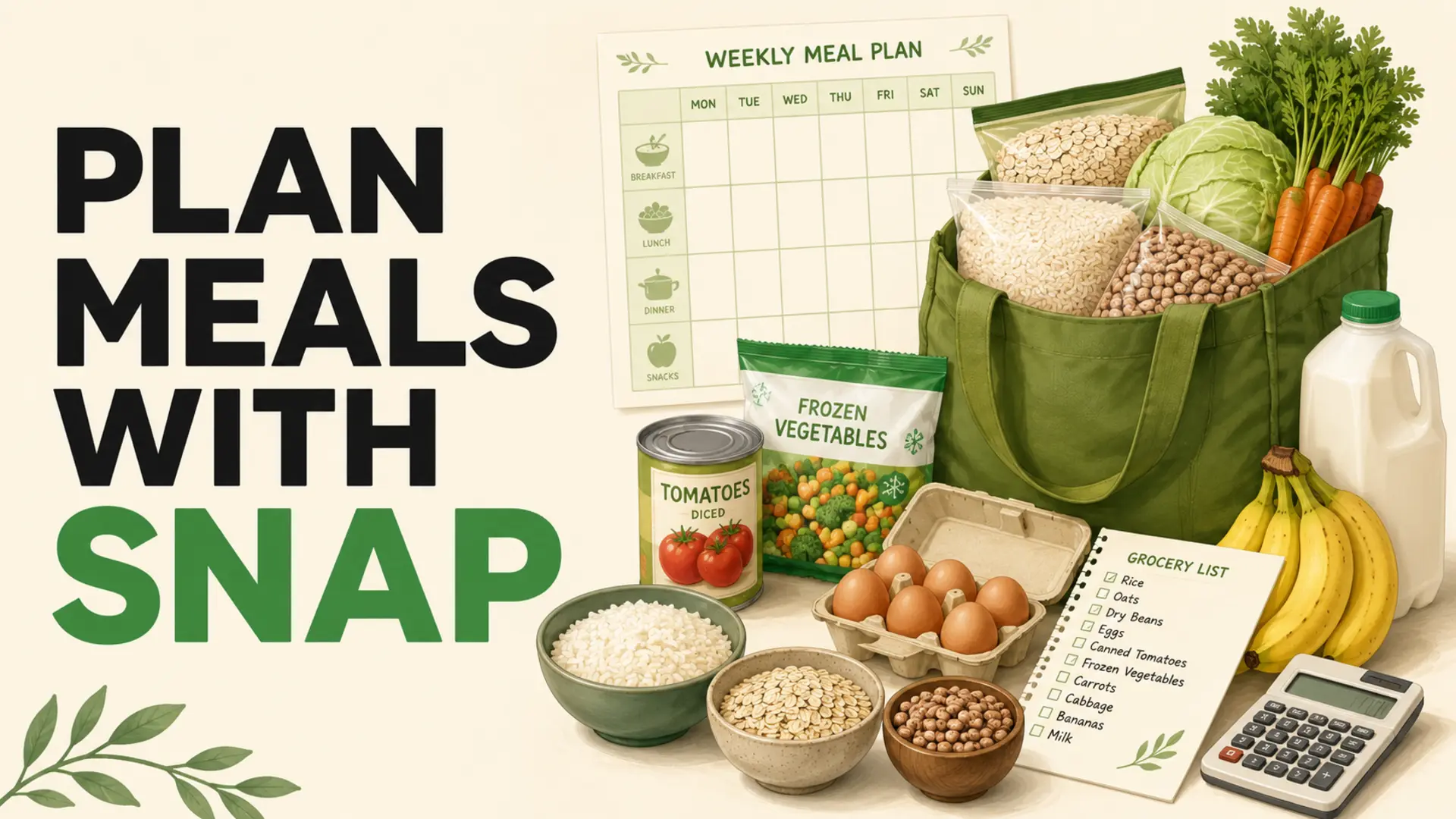
SNAP meal planning works best when it starts with your household’s real schedule, current pantry and benefit balance—not a rigid list of “perfect” foods. Build flexible meals from ingredients your household will use, divide shopping across the benefit period when practical and verify current purchase rules with your state SNAP agency.
Start SNAP meal planning with what you already have
Before making a shopping list, check the refrigerator, freezer and pantry. Note foods that need to be used soon, staple ingredients that are running low and items you already have in enough quantity. A quick pantry audit helps prevent duplicates and turns partial ingredients into useful meal ideas.
Next, review the household calendar. Mark nights when cooking time is limited, days when someone eats elsewhere and meals that need to travel. This keeps the plan realistic and reduces the chance that fresh food is left unused.
Confirm current SNAP and EBT rules
SNAP is a United States program, and EBT is the electronic system used to access benefits. USDA’s official SNAP eligible-food guidance covers common household foods such as fruits, vegetables, meat, poultry, fish, dairy products, breads and cereals. Rules and approved state waivers can change, so check your state SNAP agency or the checkout eligibility shown by an authorized retailer before relying on an older list.
Households outside the United States can use the same planning framework with their local food-benefit rules. The payment program may differ, but pantry checks, flexible meals, price comparisons and waste prevention still apply.
Build meals from flexible components
Choose a few components that can move between meals instead of assigning a completely different recipe to every day. This makes substitutions easier when prices or availability change.
- Base: rice, oats, pasta, potatoes, tortillas or another familiar grain or starch.
- Protein: beans, lentils, eggs, tofu, fish, poultry, meat or a combination that suits the household.
- Produce: fresh, frozen, canned or dried options selected for price, storage and preference.
- Flavor: herbs, spices, sauces or aromatics already available at home.
Use the same components in bowls, soups, wraps, pasta dishes, breakfast plates or tray meals. The goal is not dietary perfection; it is a workable plan that fits preferences, equipment, dietary needs and available time.
Divide the benefit period into planning windows
If cash flow, transportation and retailer access allow, divide the month or benefit period into smaller planning windows. Reserve part of the balance for later essentials instead of treating the full amount as a first-week target.
A simple approach is to plan several days at a time, then review the remaining balance and pantry before the next shop. Households that need to make one larger trip can prioritize durable staples and frozen foods while setting aside a written amount for later purchases of milk, bread or produce. Avoid a universal percentage: household needs and benefit amounts vary.
Compare unit prices and usable quantities
Large packages are not automatically cheaper or more practical. Compare the price per unit, then ask whether the household can store and use the quantity. A smaller package may be the better value when space is limited or a food is eaten infrequently.
Store brands, frozen vegetables, canned foods and dried staples can be useful comparisons, but none is always the best choice. Review sodium, added ingredients, preparation time and household acceptance where relevant. The budget-friendly meal staples guide offers flexible ideas rather than fixed price promises.
Check healthy-incentive programs locally
Some markets and retailers participate in programs that provide coupons, discounts, bonus food or additional funds for eligible purchases. USDA describes these as SNAP healthy incentives, but availability, eligible products, match limits and redemption methods vary by location.
Do not assume a specific program offers a dollar-for-dollar match everywhere. Confirm participating locations and current terms before planning a trip. The official SNAP Retailer Locator can help identify authorized retailers, while local incentive organizers can confirm their own rules.
Plan around time, equipment and accessibility
Low-cost ingredients do not help if they require cooking time, energy or equipment the household does not have. Include some convenient options for difficult days: canned beans, frozen vegetables, eggs, ready-to-eat fruit, bread, yogurt or other foods that fit current eligibility rules and individual needs.
Consider transportation and carrying limits too. A distant store with slightly lower prices may not be cheaper after fares, fuel or delivery fees. Use the most complete cost comparison available rather than judging the shelf price alone.
Create a two-level shopping list
Separate the list into essentials and flexible items. Essentials cover planned meals and household basics. Flexible items can change according to unit price, availability or a legitimate promotion.
- List the meals and portions needed for the planning window.
- Subtract ingredients already at home.
- Mark acceptable substitutions beside flexible items.
- Estimate the basket total using current local prices.
- Keep a small buffer where possible for price differences or forgotten essentials.
Reduce waste without restricting food choices
Place foods that need attention at the front of the refrigerator, freeze suitable extras promptly and schedule a use-it-up meal before the next shop. Track what is discarded without blame; repeated waste often points to unrealistic quantities, changing schedules or foods the household does not enjoy.
These household food-waste checks can help turn the pattern into a more accurate future list. Comparing the result with your grocery cost per person can also show whether the plan is becoming more sustainable over time.
Review and adjust after each shopping cycle
Effective SNAP meal planning is iterative. At the end of each planning window, check the remaining balance, food on hand, meals that worked and purchases that went unused. Adjust quantities and meal formats for the next list. A flexible plan grounded in current rules and real household habits is more useful than strict universal spending rules.
Frequently Asked Questions
What foods can be purchased with SNAP benefits?
SNAP generally covers foods for the household, including fruits, vegetables, meat, dairy, breads, cereals, snacks, nonalcoholic beverages, and seeds or plants that produce food. Rules can change, so confirm current eligibility through the USDA Food and Nutrition Service and your state agency.
What items cannot be bought with SNAP or EBT?
Common exclusions include alcohol, tobacco, vitamins or supplements with a Supplement Facts label, hot foods at the point of sale in most situations, and non-food goods. State programs and exceptions may differ, so check official current rules before planning the purchase.
How should I divide SNAP benefits across the month?
Start with the benefit amount, other available food money, shopping access, and household schedule. Divide the period into weekly or biweekly planning windows, while reserving enough for later essentials. A rigid equal split may not suit households that need an initial staple purchase.
Can SNAP be used for grocery delivery or online shopping?
Many participating retailers accept SNAP online, but availability, eligible items, delivery fees, service charges, and payment methods vary. SNAP generally does not cover delivery fees. Verify the retailer and state process before building a plan that depends on online ordering.
How can I meal plan before SNAP benefits arrive?
Inventory the refrigerator, freezer, and pantry; list meals those foods can support; and identify only the missing essentials. Schedule highly perishable foods early and keep a low-cost backup meal. This reduces the pressure to spend the entire benefit immediately.
Are farmers markets able to accept EBT?
Many do, and some areas offer incentives that increase purchasing power for eligible produce, but participation and rules are local. Search your state SNAP resources or ask the market manager before traveling. Confirm operating dates and whether tokens or another redemption method are used.
How do unit prices help with an EBT grocery budget?
Unit prices compare products using the same weight, volume, or count, revealing when a larger package is not actually cheaper. Also consider edible yield, storage, and waste. The lowest unit price helps only if the household can use the quantity.
Should I buy pantry staples at the beginning of the benefit month?
Buy a reasonable supply when it supports planned meals, but avoid tying up the entire balance in oversized packages. Confirm unit prices and existing stock first. A staged approach preserves flexibility for fresh food, schedule changes, and unavailable products later in the month.
How can I plan SNAP meals with limited cooking equipment?
List the equipment, refrigerator space, energy, time, and accessibility available before choosing recipes. Build around foods you can safely prepare with those limits. Convenience items may be worth their higher unit cost when they prevent skipped meals or unusable ingredients.
What should I do if SNAP benefits are not enough for the month?
Contact the state SNAP agency to confirm the case information and ask about available support. Community food programs, school meals, WIC for eligible families, and local assistance may help. Food adequacy comes before meeting an online budget challenge.