
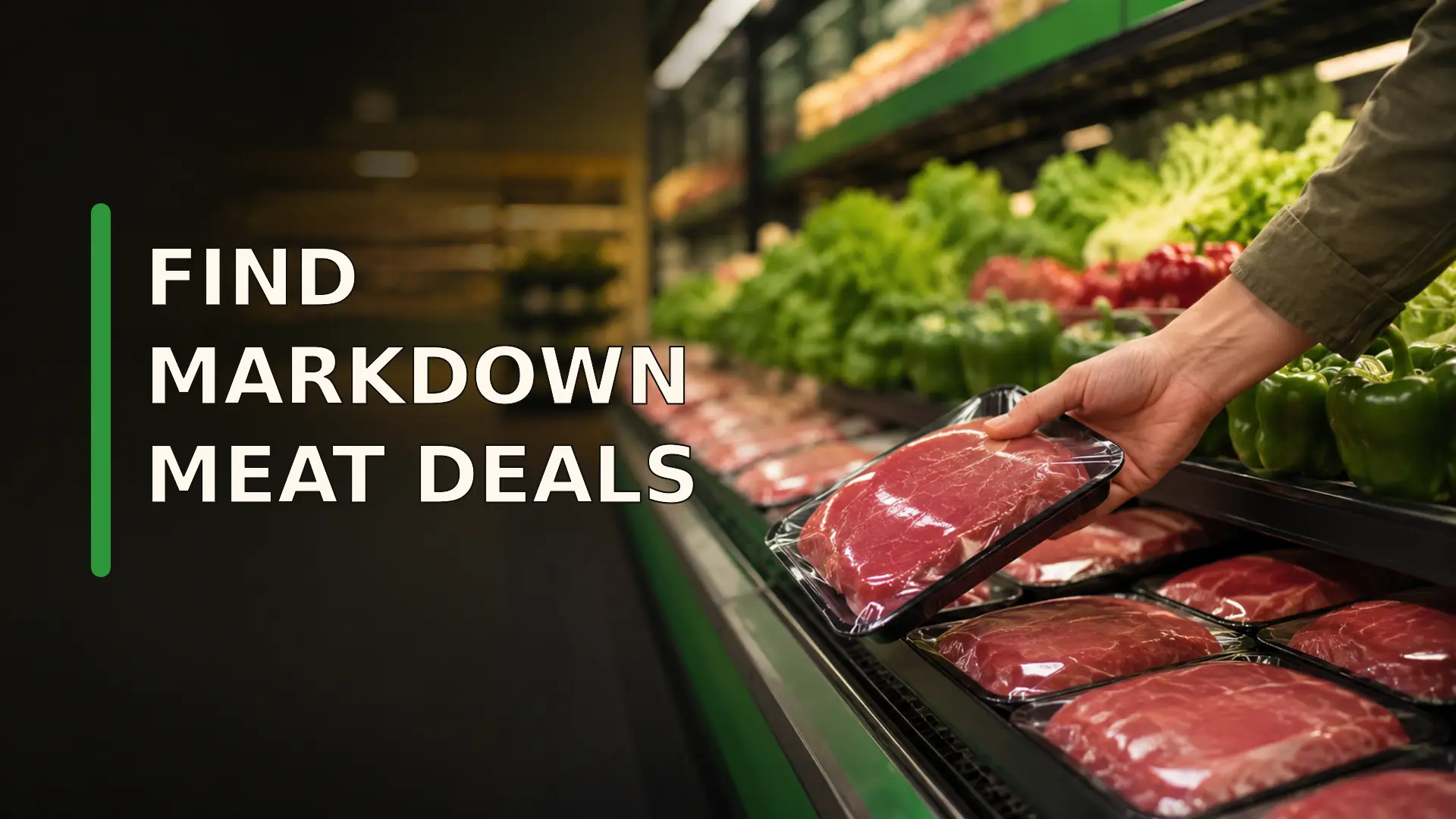
Markdown meat deals can lower the cost of meals, but the best opportunities depend on each store’s policies, stock and timing. Instead of expecting a fixed discount or shopping at one “magic” hour, learn how your local meat department marks down short-dated packages, compare the final unit price and make a safe plan to cook or freeze what you buy.
How markdown meat deals work
Stores may reduce meat as it approaches a date on the package, when demand changes or when seasonal stock needs to move. The label might say manager’s special, reduced for quick sale or clearance. Discount size, eligible products and markdown schedules vary by retailer and location, so treat any percentage or time of day as store-specific rather than guaranteed.
A lower sticker price is not automatically the best value. Compare the price per unit with similar cuts, then consider trim, bones, portion size and whether your household will use the package. Our guide to bulk-buying calculations explains the same usable-value principle for larger packages.
Learn your store’s markdown routine
Ask a short, neutral question at a quiet moment: “When do you usually review short-dated meat, and where are reduced packages displayed?” Staff may point you to a dedicated section or explain that timing changes with deliveries and staffing. Some stores mark items down throughout the day; others do not offer customer-requested reductions.
Respect the answer and do not pressure an employee to alter a price. A package reaching its displayed date may be discounted, removed or handled under another store procedure. Policies and date-label rules also differ by country and region.
Inspect every package before buying
- Check that the package is sealed, cold and free from leaks or damage.
- Read the full label, including the product name, weight, date, storage directions and original versus reduced price.
- Skip packages that are warm, swollen, torn or otherwise compromised.
- Check current food recalls in your country when relevant.
- Choose only an amount you can cook or store promptly.
Colour alone can change for several normal reasons and is not a complete safety test. When a package or refrigerator case seems questionable, leave it and notify store staff rather than trying to judge it from appearance alone.
Compare the real value, not just the sticker
Calculate the reduced unit price using the store’s standard unit, such as price per kilogram or pound. Then compare like with like: bone-in with bone-in, ground meat with the same lean percentage, and family packs with similar package sizes. A modestly reduced cut that fits two planned meals can be better value than a steeply discounted package that creates waste.
Use a pantry and freezer audit before shopping so you know how much space is available and which ingredients can complete a meal. Record the normal and reduced unit prices in a grocery price book if you want to judge future offers more confidently.
Plan the meat before it enters your cart
Assign each package to a specific meal or freezer portion. Flexible uses include soups, stir-fries, tacos, pasta sauces and grain bowls, depending on the cut. If a large package only works after portioning, make sure you have freezer-safe wrapping, labels and enough time to do that promptly.
For more portions without making meat the only focus of the meal, see these practical ways to stretch ground meat across meals. Beans, lentils, vegetables and grains can add volume and variety without relying on a specific savings claim.
Keep markdown meat cold on the way home
Pick up refrigerated and frozen foods near the end of the shopping trip. Keep raw meat separated from produce and ready-to-eat foods, and use an insulated bag or cooler when travel time or weather could make temperature control difficult. Put it in the refrigerator or freezer promptly after arriving home.
Refrigerate or freeze according to the product
Storage time is not one-size-fits-all. FoodSafety.gov lists different refrigerated and frozen quality windows for ground meat, poultry, steaks, chops and roasts. Its cold food storage chart says refrigerators should be at 40°F (4°C) or below and freezers at 0°F (-18°C) or below. Follow the package instructions and your local food-safety authority when guidance differs.
If freezing, divide the package into useful portions, wrap it to limit air exposure, and label it with the item and freeze date. Freezing preserves safety when food stays continuously frozen, but recommended freezer times are mainly about maintaining quality.
Cook safely and prevent cross-contamination
Wash hands after handling raw meat, clean utensils and surfaces, and keep raw juices away from other foods. Use a food thermometer and follow the safe minimum temperature for the specific meat rather than relying on colour or texture. Do not taste food to decide whether it is safe.
Build markdown finds into a flexible list
Write “markdown option” beside a planned protein rather than adding every reduced package you see. Note an acceptable substitute and a maximum unit price. A structured approach like this grocery-list method keeps the deal connected to meals you already intend to make.
- Primary choice: the cut and quantity your plan needs.
- Substitute: another protein that works in the same meal.
- Price ceiling: the highest unit price that still represents value for you.
- Storage plan: cook soon, refrigerate within guidance or freeze promptly.
When to walk away
Skip the offer when the packaging is damaged, the product has not stayed cold, the amount exceeds your storage capacity or the reduced unit price is still higher than a suitable alternative. A markdown only saves money when it becomes a safe, useful meal.
A practical markdown meat strategy
The most reliable way to find markdown meat deals is to learn local store practices, inspect packages carefully, compare usable unit prices and decide on cooking or storage before checkout. Stay flexible, courteous and safety-focused; the goal is not the largest sticker discount, but food your household can use well.
Frequently Asked Questions
When do grocery stores mark down meat?
There is no universal schedule. Ask staff courteously, observe your regular store over several visits, and check refrigerated markdown areas. Timing may change with delivery days, staffing, and inventory.
Is markdown meat safe to buy?
It can be when packaging is intact, the product is properly chilled, and it is within the displayed date. Avoid leaking, swollen, torn, warm, or suspicious packages and follow safe handling immediately.
Can I negotiate the price of meat at a supermarket?
Policies vary. Some independent stores may consider an adjustment for a legitimate packaging or date issue, while chains use fixed markdown systems. Ask politely and accept the employee’s answer.
What should I check before buying discounted meat?
Check the date, package seal, temperature, amount of liquid, color changes, unit price, usable quantity, and whether you can cook or freeze it promptly. A large discount does not override safety concerns.
Should I freeze markdown meat immediately?
Freeze it promptly if you will not cook it within the safe refrigerated period. Keep it cold during transport, package it to limit air exposure, and label the product and freezing date.
How do I compare a markdown sticker with other meat deals?
Calculate the final price per pound or kilogram, then account for bones, skin, excess fat, and portions your household will eat. A regular-priced alternative may provide more usable food.
Can discounted meat be refrozen after thawing?
USDA guidance permits refreezing food thawed safely in the refrigerator, though quality may decline. Meat thawed by cold water or microwave should be cooked before refreezing; see USDA freezing and thawing guidance.
How do I transport marked-down meat safely?
Pick it up near the end of the trip, separate it from ready-to-eat food, use an insulated bag for a long journey, and refrigerate or freeze it promptly after reaching home.
What meals work well with unpredictable markdown meat deals?
Keep flexible templates such as stir-fries, soups, tacos, pasta sauces, sheet-pan meals, and grain bowls. Buy only when the cut can replace a planned protein rather than creating an extra meal.
When should I walk away from a meat markdown?
Skip it when the package is compromised, temperature is uncertain, the date is unsuitable, the unit price is still poor, or you have no safe storage and realistic plan for the quantity.