
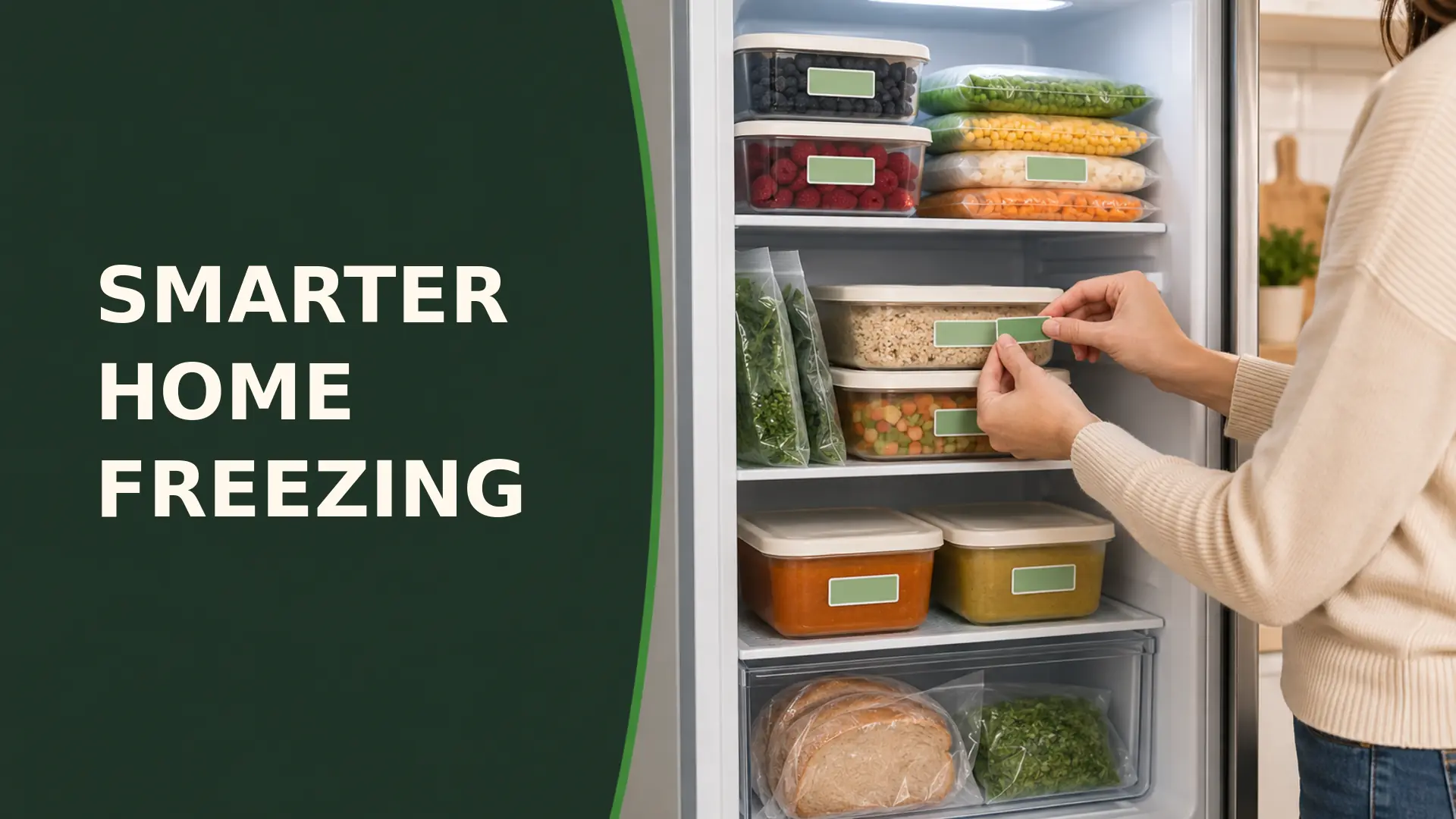
Learning how to freeze food can reduce waste and make planned meals easier, but not every food freezes well and preparation matters. Freeze food while it is still in good condition, cool cooked dishes safely, use moisture-resistant packaging, label every container and follow food-specific storage guidance. The goal is useful portions and reliable quality—not filling the freezer simply because an item was discounted.
What freezing can and cannot do
Freezing slows microbial growth but does not make unsafe food safe or restore food that has already spoiled. It also does not preserve texture perfectly. Water forms ice crystals, so some foods become softer, separated or watery after thawing.
FoodSafety.gov notes that food kept continuously frozen at 0°F (-18°C) or below can remain safe indefinitely, while published freezer times are primarily about quality. For best results, use the recommended quality window for the specific food and follow local food-safety guidance.
How to freeze food safely
- Freeze fresh food before its quality declines.
- Use clean, freezer-safe packaging that limits air and moisture.
- Divide food into portions that will be used together.
- Leave suitable expansion space for liquids.
- Label the item, preparation state and freeze date.
- Keep the freezer at 0°F (-18°C) or below.
Do not freeze food in packaging that is damaged or unsuitable for low temperatures. Glass containers must be freezer-safe and should not be overfilled. Never freeze unopened cans or eggs in their shells.
Cool cooked food promptly
Large pots cool slowly. Divide soups, stews, grains and casseroles into shallow containers so they cool more quickly, then refrigerate or freeze within the time recommended by your local food-safety authority. Avoid leaving cooked food at room temperature for extended periods.
Do not pack a crowded freezer with several large containers of hot food. That can warm nearby items and delay cooling. Smaller portions also freeze and thaw more evenly.
Freeze produce for its future use
Wash produce as appropriate, remove damaged parts and dry it well. Many vegetables keep better colour and texture when blanched before freezing; consult a trusted food-preservation guide for the specific vegetable and timing. Berries and cut fruit can be frozen in a single layer before being transferred to a bag so pieces remain easier to portion.
Expect thawed produce to be softer than fresh. Plan it for soups, sauces, baking, smoothies or cooked dishes rather than assuming it will retain a crisp raw texture.
Freeze dairy products with realistic expectations
Some cheeses freeze adequately for later cooking but may become crumbly. Milk, cream and some sauces can separate after thawing. Freeze a small test portion first, use freezer-safe containers with expansion room, thaw in the refrigerator and stir or shake only when appropriate.
Texture-sensitive dairy products may be better used before freezing or incorporated into a cooked dish. Do not add ingredients such as starch solely because a universal online tip promises perfect results; the best method depends on the product and its future use.
Handle eggs correctly
Do not freeze raw eggs in their shells. FoodSafety.gov advises beating raw yolks and whites together before freezing, while noting that yolks alone do not freeze well. Label the amount so the thawed egg can be measured for cooking or baking, and thaw it in the refrigerator.
Freeze cooked grains, bread and sauces in portions
Cool cooked rice and grains promptly, portion them into shallow freezer-safe containers and reheat thoroughly. Freeze sliced bread with separators if only a few pieces will be used at a time. Portion tomato paste, pesto or sauce according to the quantities your recipes require.
A freezer meal-prep checklist can help decide which ingredients are worth buying for planned meals and which are likely to lose quality or remain unused.
Protect food from freezer burn
Freezer burn is a quality problem caused by moisture loss and air exposure. Remove excess air without crushing delicate foods, choose packaging designed for freezing and close it securely. Freezer-burned areas may be dry or discoloured; quality can suffer even when the food remains safe.
Flat bags save space and can thaw efficiently, but liquids need secure closures and room to expand. Place newly filled bags on a tray until frozen in case of leaks.
Label and rotate the freezer
- Food name and key ingredients
- Raw or cooked status
- Number of portions
- Freeze date
- Allergen or reheating note when needed
Place older items where they can be seen and review the freezer before shopping. A regular pantry and freezer audit prevents the same item from being purchased again while an older package is hidden below it.
Thaw food using a safe method
Thaw perishable food in the refrigerator, in cold water with appropriate controls, or in a microwave when it will be cooked promptly. Do not thaw perishable food on the counter. Some foods can be cooked directly from frozen when package or recipe directions support it, but cooking time will change.
Check the current FoodSafety.gov cold-storage chart for food-specific refrigerator and freezer guidance. International readers should follow their national or local food-safety authority.
Reheat and use thawed food carefully
Follow food-specific reheating guidance and use a thermometer when required. Stir foods heated in a microwave to reduce cold spots. Do not rely on appearance alone to decide whether meat, poultry, casseroles or leftovers are safely reheated.
Plan thawed portions for a specific meal so they do not become another source of waste. Leftover components can be transformed using these ideas for repurposing leftovers into new meals.
Decide whether bulk buying belongs in the freezer
A discount creates value only when the freezer has space, the food freezes well and the household will use it within a reasonable quality window. Calculate the usable unit price, packaging cost and likely waste before purchasing. Our guide to bulk buying without food waste provides a practical decision process.
A smarter home-freezing routine
To freeze food successfully, start with good-quality ingredients, prepare them for their future use, cool cooked food safely, pack out excess air, label clearly and rotate older items forward. Check food-specific instructions rather than assuming everything freezes the same way. A well-managed freezer saves money only when its contents become safe, enjoyable meals.
Frequently Asked Questions
Can you freeze almost any food?
Many foods freeze safely, but quality varies. High-water produce, emulsified sauces, fried foods, and some dairy products may change texture. Freeze according to the food’s intended future use.
Does freezing kill bacteria in food?
No. Freezing generally stops microbial growth but does not make unsafe food safe. Start with food handled safely, thaw it correctly, and cook it to an appropriate temperature.
What is the safest way to thaw frozen food?
The USDA recommends thawing in the refrigerator, in cold water changed regularly, or in the microwave. Food thawed by cold water or microwave should be cooked immediately.
How should cooked food be cooled before freezing?
Refrigerate promptly in shallow containers rather than leaving it at room temperature to cool completely. Once chilled, portion, seal, label, and freeze what will not be used soon.
Can milk, cheese, and yogurt be frozen?
Many dairy products can be frozen, but separation or texture changes are common. They may work better in cooking than for eating fresh, so test a small portion first.
Can raw eggs be frozen in their shells?
No. Remove eggs from the shell, beat yolks and whites together or separate them as needed, use a freezer-safe container, and label the quantity. Cook thawed egg mixtures thoroughly.
How do I prevent freezer burn?
Use moisture-vapor-resistant packaging, remove excess air, seal well, freeze promptly, and maintain a stable freezer temperature. Freezer burn affects quality rather than automatically making food unsafe.
What information should go on freezer labels?
Write the food name, preparation or seasoning, portion size, and freezing date. For raw meat or meal components, add enough detail to identify the intended recipe or cooking method.
Can thawed food be refrozen?
Food thawed safely in the refrigerator can generally be refrozen, although quality may decline. Cook food thawed in cold water or the microwave before refreezing it.
How does freezing food actually save money?
It saves when it preserves planned leftovers, sale purchases, and ingredients before spoilage. Savings disappear when packages are unlabeled, forgotten, damaged by air, or bought in quantities the freezer cannot manage.