
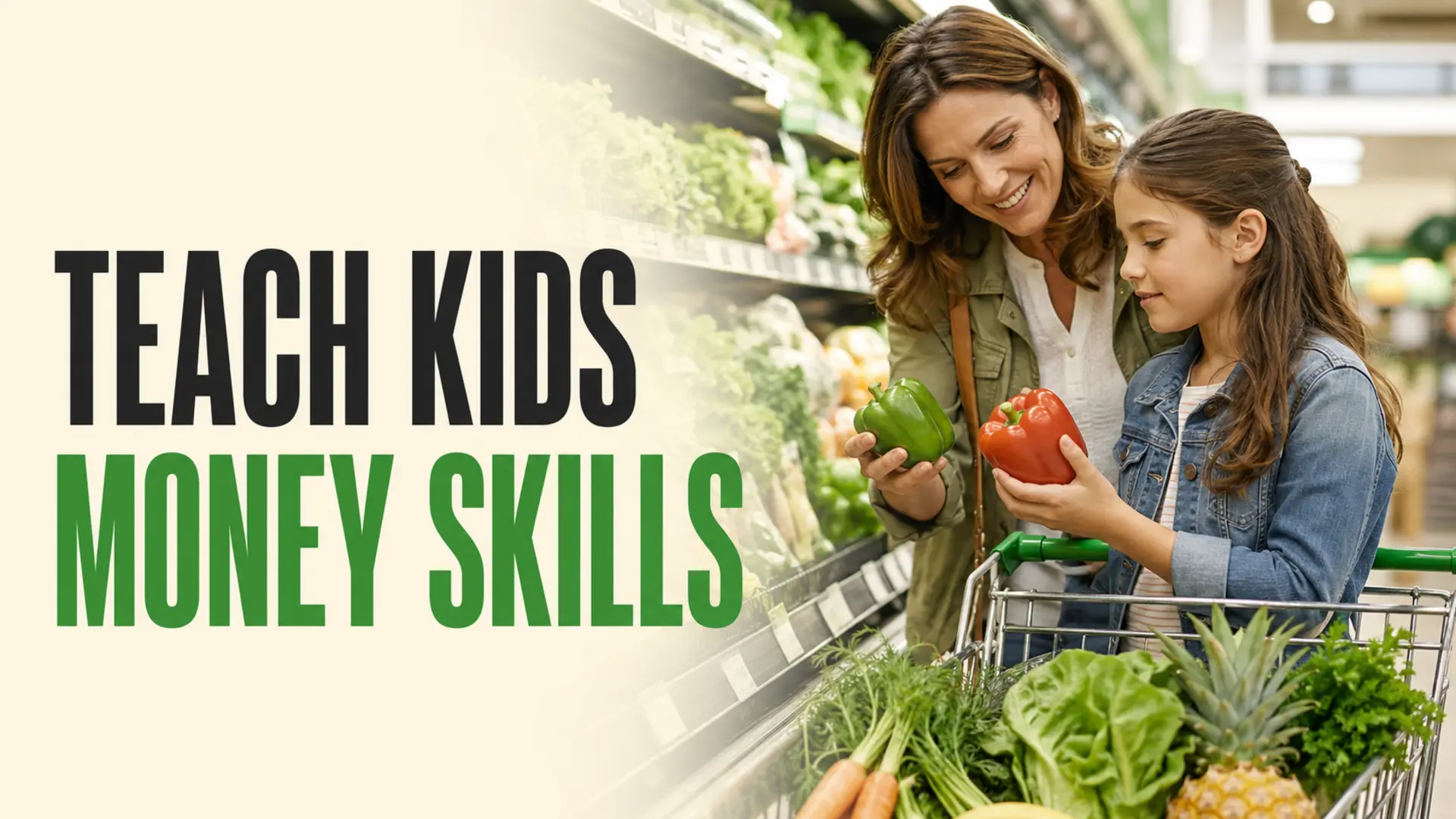
To teach kids financial literacy at the grocery store, give them one real decision at a time. Let them compare two prices, separate needs from wants, estimate a small total, or help plan one meal. The lesson should match the child’s readiness and stay low-pressure—the goal is to practise thinking, not to turn every shopping trip into a test.
How to teach kids financial literacy at the grocery store
Start before leaving home. Explain the day’s goal in plain language: “We have a list and a spending limit, and we will decide how to use it.” A budget is simply a written plan for how money will be spent, as explained in this Consumer.gov budgeting guide.
Choose one short activity so the child can participate without slowing the whole trip. You can add more responsibility on later visits.
1. Sort needs, plans, and extras
Show the child the grocery list and ask which items are required for planned meals. Then identify optional snacks or treats. Avoid describing every wanted item as “bad.” Instead, explain that a budget helps a family choose what to buy now and what to leave for another time.
A reusable weekly shopping list makes the categories visible before you enter the store.
2. Compare package price and unit price
For children comfortable with basic numbers, choose two similar products and compare both the total price and the unit price. Shelf labels may show cost per ounce, pound, kilogram, litre, or 100 grams, depending on the store and country.
- Ask which package costs less today.
- Ask which offers the lower price for the same amount.
- Discuss whether the household can use the larger package before it spoils.
- Check whether storage space or the available budget changes the decision.
This turns the comparison into a value decision rather than a hunt for the biggest package. See our guide to using unit pricing at the supermarket for a repeatable method.
3. Estimate a small section of the cart
Ask the child to estimate the cost of three to five items, then add the actual shelf prices with paper, a calculator, or a phone note. Rounding can make the activity easier. For example, a price ending in .79 can be rounded up to the next whole number for a quick estimate.
Compare the estimate with the receipt later. The purpose is to learn how small purchases combine—not to expect a perfect answer. Our estimated grocery cart total guide provides a fuller household version of the exercise.
4. Plan one flexible meal
Let an older or more experienced child choose ingredients for one meal within a limit you set from current local prices. Give clear requirements, such as a protein food, a grain or starch, and fruit or vegetables, while allowing substitutions.
Do not use a fixed dollar challenge copied from another household. Prices, family size, dietary needs, and available pantry food vary. A better exercise is to price the meal together, compare alternatives, and explain the trade-offs.
5. Review the receipt together
- Find the most and least expensive items.
- Compare estimated and actual totals.
- Notice discounts without assuming every promotion was necessary.
- Choose one lesson to use on the next trip.
If the child enjoys tracking prices, help them start a simple grocery price book with a few frequently purchased items.
Keep the money lesson positive
Avoid sharing financial stress in a way that makes a child feel responsible for the household budget. Give genuine choices within boundaries, praise thoughtful reasoning, and accept that the cheapest option is not always the right one.
Teaching kids financial literacy at the grocery store works best through small, repeated decisions. Begin with one comparison, explain your reasoning aloud, and let responsibility grow as the child becomes ready.
Frequently Asked Questions
What money skills can children learn at the grocery store?
They can practice distinguishing needs from extras, comparing prices, reading unit prices, estimating totals, making tradeoffs, checking change, and understanding that a limited budget requires choices.
At what age can children help with grocery budgeting?
Even young children can choose between two items or match products to a list. Older children can compare unit prices, estimate a category total, and plan a simple meal within a limit.
How do I explain unit price to a child?
Show that package price is the total paid while unit price compares a common amount, such as 100 grams or one item. Use two similar products and calculate together.
Should children see the full household grocery budget?
Share information appropriate to the child’s age and emotional maturity. Teaching limits is useful, but children should not feel responsible for adult financial stress or whether the family has enough food.
What is a simple grocery-store budgeting activity?
Give the child a small category—such as fruit or snacks—with a clear limit and requirements. Let them compare options, estimate the total, and explain the choice before checkout.
How can a shopping list teach needs versus wants?
Label meal essentials, planned choices, and optional extras. Explain that wants are not bad; they are purchased after needs and only when the budget allows.
Should children use cash or a calculator at the store?
Either works. Cash makes a fixed limit visible, while a calculator reflects real shopping and helps with weighted items. Choose the method that matches age and learning goals.
How can coupons be used in a financial-literacy lesson?
Compare the final price after the coupon with alternatives, verify size and quantity requirements, and ask whether the item was needed. A discount is not savings when it creates an unnecessary purchase.
What should families review on the receipt together?
Check quantities, discounts, taxes where applicable, and the difference between estimate and total. Focus on learning rather than shaming anyone for a choice.
How do I keep grocery money lessons positive?
Use small decisions, praise thoughtful comparison, allow harmless mistakes within the activity budget, and avoid turning food preferences into moral judgments. The goal is confidence and practical reasoning.